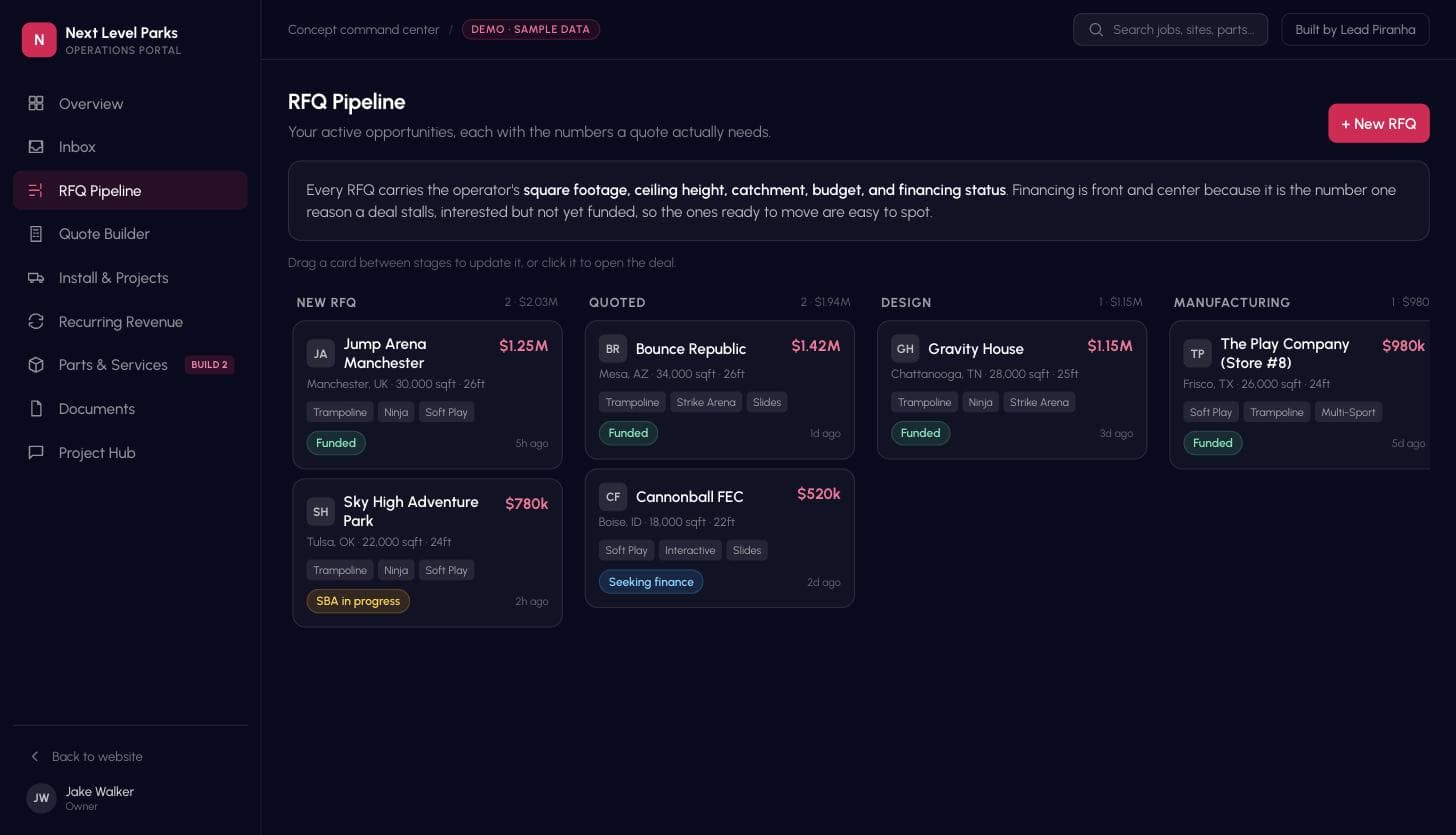
How to Respond to an RFQ Before Your Competitor Does
How to respond to an RFQ fast enough to win it: the five stages of a quote, where each one stalls, and the follow-up almost no manufacturer runs.
An RFQ lands in a shared inbox on a Tuesday morning. It needs a number that only two people in the building can give, and both of them are on a job site until Thursday. By the time the quote goes out, it is the following Wednesday, and the buyer has been reading two other quotes since Friday. Nobody did anything wrong. The order is just gone. Knowing how to respond to an RFQ is less about the document you send back than about the eight days before you send it, and that is the part almost nobody writes down.
Most advice on this topic hands you a template and stops. The template is the easiest piece. What decides the order is how fast the response moves through your building, what you asked for up front, and whether anyone follows up once it is out. This covers all three: where an RFQ response actually stalls, what belongs in the one you send, and why the quote that goes out first tends to win even when it is not the cheapest.
Why Does an RFQ Sit for a Week Before Anyone Answers It?
Because it is waiting on a person, not a process.
In most founder-led manufacturers, the pricing that matters lives in one head and in a folder of old quotes. That works fine at ten RFQs a month and quietly breaks at thirty. The bottleneck is never the typing. It is that the one person who can price a custom run is also the person running the company, and the RFQ waits for a gap in their week.
The second delay is quieter and costs more. An RFQ arrives with half the information you need, so you reply asking for the site dimensions, the timeline, and the budget range. That reply takes two days to come back. Then you have a follow-up question about the install conditions. Another two days. You have not started pricing and a week is gone, and every one of those round trips was predictable enough to have been asked on the form the buyer filled in.
| Stage of the response | Where it usually goes | What it costs you |
|---|---|---|
| RFQ arrives | A shared inbox nobody owns | A day, sometimes two, before anyone reads it |
| Details are missing | Email back and forth with the buyer | Two to five days of round trips you could have skipped |
| Pricing gets built | Waits for the one person who knows the numbers | The longest stretch, and the least visible |
| Quote goes out | Attached to an email and considered done | Nothing yet, this is where most people stop |
| Nobody follows up | The file sits until the buyer either replies or does not | The order, most of the time |
Look at that table and notice which row is the cheapest to fix. Skip past the pricing stage, which is genuinely hard, and look at the second row, where a better intake form removes a week of email, and the last row, where nothing is happening at all.
The Lead Piranha Playbook
You're doing the work of a team you don't have.
Every Tuesday I show you one job I automated for good. What it does, the tools by name, and the prompt to copy.
No spam, unsubscribe anytime.
What Should an RFQ Response Actually Contain?
Enough for the buyer to decide, and not much else.
A good RFQ response answers the question the buyer is actually holding, which is usually some version of "can these people do this, on my timeline, for a number my board will sign." That means scope in their words, a clear price with the assumptions it rests on, a lead time you can hold, and the proof that you have done this exact thing before. Certifications belong here, not buried on an about page.
What loses orders is rarely a missing line item. It is ambiguity. A quote that says "installation additional" invites a phone call the buyer may not bother making. A quote with three options and no recommendation pushes the decision back onto someone who asked you because they did not want to make it. If you have a view on which option fits, say so and say why.
Before
- RFQ read whenever someone opens the shared inbox
- Details gathered over a week of email
- Pricing waits for the owner to be free
- Quote sent as an attachment with no summary
- No follow-up unless the buyer replies first
After Lead Piranha
- RFQ acknowledged the same day with a real timeline
- Scope
- site
- budget and dates captured on the form
- Repeatable pricing available without waiting on one person
- Quote leads with a recommendation and the assumptions behind it
- Two scheduled follow-ups before the file goes quiet
What the right column describes is the same team with the waiting removed, rather than a bigger one. We go through the whole thing stage by stage in our guide to RFQ and quoting systems for manufacturers, and if you want the shorter version of how a build runs, our process overview is the same walkthrough we give an owner on a first call.
Does Responding Faster Really Win More Orders?
It wins more than most people expect, and the reason is not that buyers are impatient. RFQ response time works differently here than it does in consumer sales.
Harvard Business Review's study of online sales leads found that response times measured in hours rather than days changed qualification odds dramatically, and that most companies badly overestimated how quickly they actually replied. The effect holds in capital equipment for a different reason than it does in consumer sales. A buyer working through an RFQ is building a shortlist. The first credible quote sets the frame that every later quote gets compared against, and the companies that arrive third are arguing with a number the buyer has already anchored on.
There is a second advantage that is easier to miss. Responding early leaves you time to follow up while the decision is still open. A quote sent on day two can be chased on day nine and day sixteen and still land before the buyer decides. A quote sent on day nine gets one chance. This is the same pattern we see in trades work, where winning the quote race on EV charger installs comes down to who is still in the conversation rather than who bid lowest, and where following up on a plumbing quote recovers work everyone assumed was lost.
How to Respond to an RFQ Without Adding Headcount
Three changes, in the order that pays back fastest.
Start with intake, because it is the cheapest and it removes the most calendar time. If your site sends buyers to a contact form with a message box, you are choosing to spend a week on email. A real quote request asks for project scale, site location, timeline, current setup, and a budget range. Every field there is a round trip you never have to make. We have seen manufacturers whose homepage buttons all led to a brochure download rather than a quote request, which means the most motivated buyer on the site had nowhere to go.
Next, separate the pricing that is genuinely custom from the pricing you have already decided the same way fifty times. The custom judgment stays with whoever owns it. Everything else becomes something a coordinator can assemble without waiting, which is what turns an eight-day quote into a two-day one. Nobody is asking you to reduce your business to a formula. The goal is that routine work stops queueing behind the founder.
Last, make equipment quote follow up automatic. Not a reminder to follow up, which competes with everything else in the day, but scheduled touches that go out whether or not anyone remembers. Two of them, spaced across the decision window, recover a surprising share of quotes that would otherwise go quiet. It is the single highest-return change on this list and the one most often left to memory.
The one thing to take away
The RFQ response you send matters less than the eight days before you send it. Fix the intake so you stop trading emails, get repeatable pricing out of one person's head, and schedule the follow-up so it happens without anyone deciding to do it.
Get Your Next Quote Out While the Buyer Is Still Deciding
If your quotes are going out a week late, what usually fixes it is removing the places the response waits rather than buying a better template or hiring another estimator. That means an intake that asks the right questions up front, pricing that more than one person can give, and follow-up that somebody actually scheduled. We build that system around the tools you already run and then keep it running every month, which is the done-for-you version for equipment manufacturers. If getting quotes out the same day would change your year, apply here and we will look at where yours actually stalls.
Next in this thread: what happens when the pricing itself is the bottleneck, and how to get it out of the owner's head without turning your business into a spreadsheet.