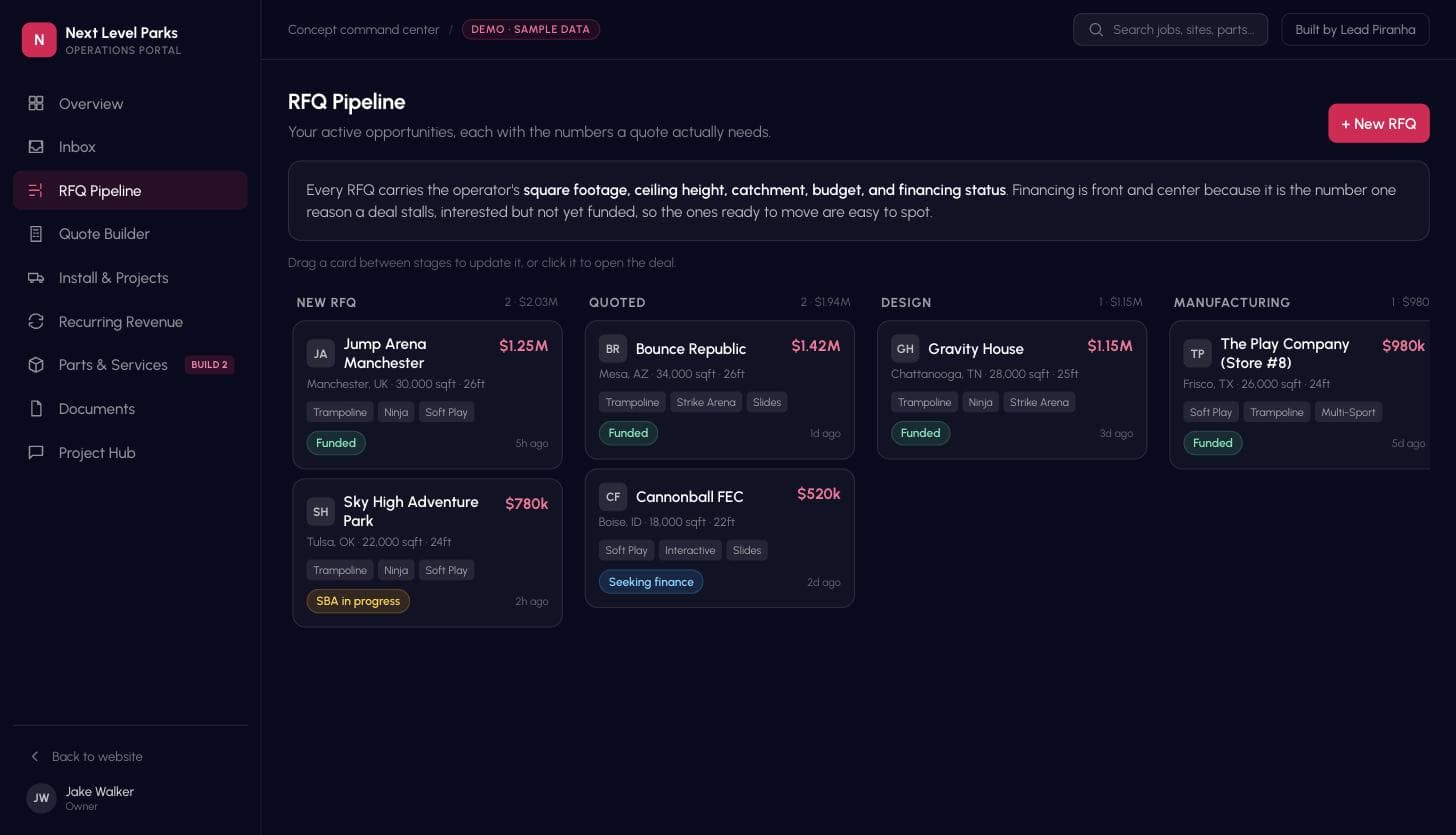
How to Write a Quote That Wins the Equipment Order
How to write a quote for equipment orders: the six fields buyers compare, the three lines that lose deals, and why the first number sets the anchor.
An RFQ landed this morning from a buyer you've never met, for a build you've priced a hundred times. Somewhere between that inbox and your reply, the order gets won or lost, and the document itself is only part of it.
Knowing how to write a quote that wins comes down to two things: what's on the page, and how fast the page arrives. This post covers the six fields buyers actually compare, the three lines that quietly cost you deals, what sequencing does to your win rate, and the one habit that makes every quote after this one faster to produce.
What Belongs on an Equipment Quote?
The buyer comparing three quotes scans for six things, and everything else is decoration:
- The configured price, broken into base, options, and freight, so nothing feels hidden
- Lead time stated as a date range, not "TBD pending confirmation"
- What's included and what explicitly isn't, in plain sentences
- A validity window, so your number can't be shopped against you for a quarter
- Payment terms and the deposit that locks the production slot
- One named human with a direct line, because a six-figure order wants a person
Notice what's missing from that list: the twelve-page spec appendix. Attach it if the buyer needs it, but the decision gets made on page one, usually in under two minutes, often on a phone between meetings.
A sales quotation is a commitment with a deadline attached, so the ordering matters as much as the contents. Price first reads as a bid, and price after scope reads as a proposal, which is why the strongest quotes open with what the buyer gets and land the number underneath it.
The three quiet deal-killers
"Price subject to change without notice" reads as a trap. "Lead time TBD" reads as a supplier who doesn't know their own shop. And a quote with no expiration invites the buyer to sit on it while your material costs move. All three feel safe to write, and all three cost orders.
The pattern behind those three is the same: language that protects you from commitment reads, on the buyer's side, as a reason to pick the supplier who committed. Every hedge you add is a small transfer of risk from you to them, and they can feel it.
Does Speed Really Beat Polish?
On the numbers, yes, and it isn't close. In Aleran's survey of 200 B2B manufacturing decision-makers, 88% had lost deals to their manual quoting process, and 71% said a quote takes at least a day to produce. The buyer who sent that RFQ is holding a project deadline, and the first credible number becomes the anchor every later quote gets measured against.
A same-day quote at page-one clarity beats a three-day quote with a beautiful appendix, because by day three the anchor belongs to somebody else and you're arguing against a number the buyer has already started planning around.
The Lead Piranha Playbook
You're doing the work of a team you don't have.
Every Tuesday I show you one job I automated for good. What it does, the tools by name, and the prompt to copy.
No spam, unsubscribe anytime.
There's a version of this that trips up careful shops in particular. The instinct to send nothing until everything is confirmed feels responsible, and it loses to the competitor who sent a standard configuration on day one and revised it on day two.
What If the Price Depends on Something You Don't Know Yet?
Quote the part you can stand behind today, and put a date on the rest. This is the single habit that separates shops who win contested orders from shops who feel like they're always second. A partial number with a clear boundary is still a real quote: base configuration at this price, the custom fabrication priced by Thursday once the drawing is confirmed. The buyer can start planning around it, which is the whole point of the anchor.
What loses the order is silence while you assemble the perfect number. From the buyer's side, silence and "not interested" look identical, and they're working to a deadline that doesn't care which one it was.
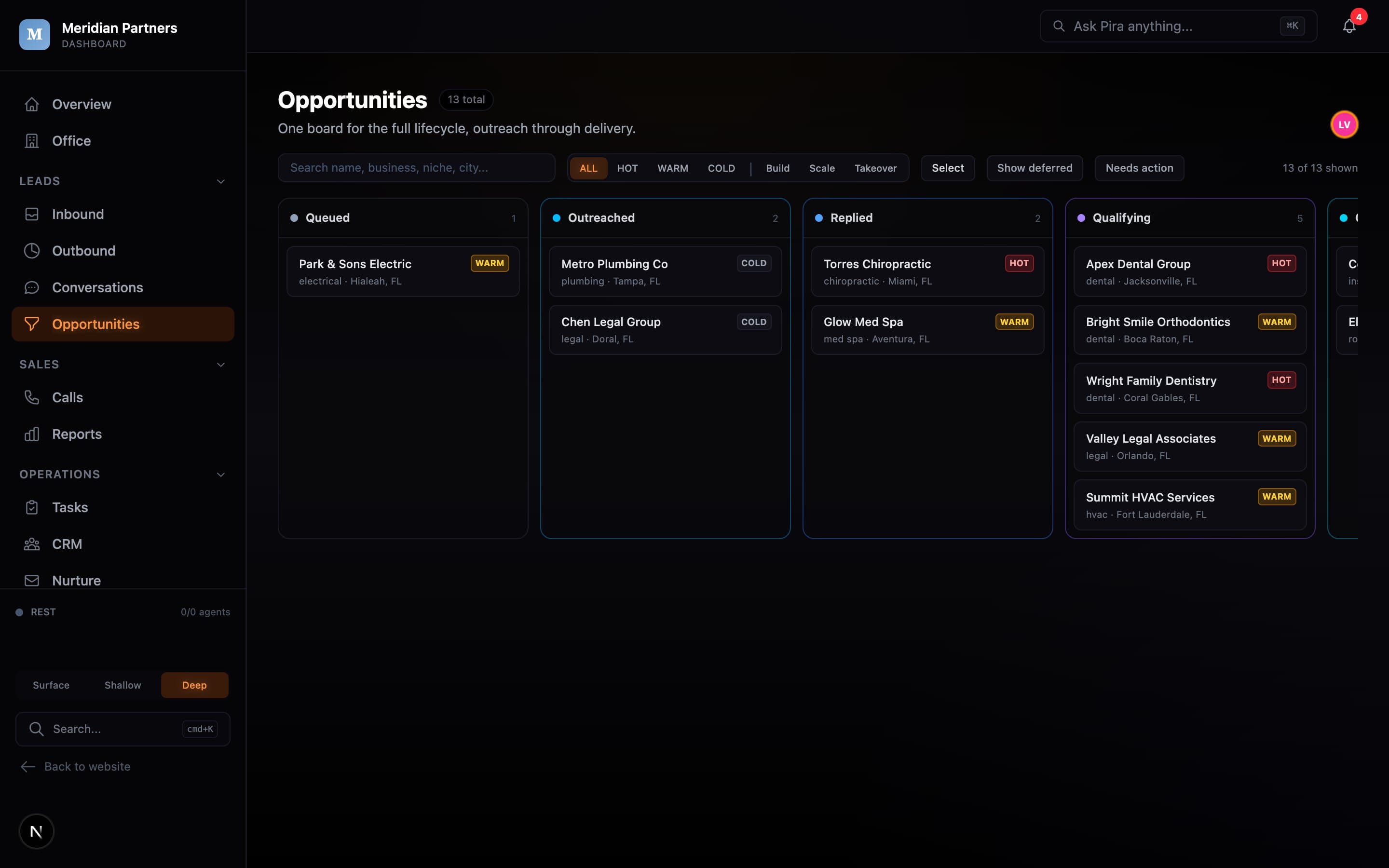
That's the view we build so open quotes stop living inside one person's inbox. The mechanism matters less than the visibility: anybody on the sales side should be able to answer "what's outstanding and how old is it" without going to the owner for it.
Why Does the Same Quote Take Three Days Here and Three Hours There?
Because of where the pricing lives. At the slow shop, the numbers are in one person's head, and that person also runs the company, so every quote queues behind their calendar. At the fast shop, the repeatable eighty percent is written down where anybody in sales can reach it.
Nobody sets out to build the slow version. It happens because the founder priced everything personally for the first decade and was genuinely the fastest way to get a number, right up until the volume outgrew one calendar. The skill stayed valuable but stopped being available on demand, and quotes started aging in an inbox waiting for a gap between meetings.
This is the whole of manufacturer quoting in one habit, and building the price book is the most valuable afternoon in the business. Treat it as a quote template you fill rather than a document you compose: pull your last twenty quotes and write down, for each one, the base, the options, and the adders that moved the number. The patterns repeat faster than anyone expects, and the exceptions that genuinely don't fit are the custom work that deserved a human anyway.
| What goes in the price book | Why it earns its place |
|---|---|
| Base price per product line | Removes the most common reason a quote waits |
| Option and add-on adders, flat | Turns configuration into arithmetic anyone can do |
| Freight rules by zone and crate size | The line most often guessed, and most often wrong |
| Written volume breaks | Stops the same discount being renegotiated every time |
| The escalation rule | Names exactly which quotes still need you |
| One owner who updates it | Without this it is accurate for a quarter, then quietly is not |
Writing it down doesn't mean giving up judgment on the hard ones. It means the routine eighty percent stops competing with the hard ones for your attention, so the quotes that genuinely need you actually get you. We wrote about the bottleneck itself in when the quote waits on one person, which is the same trap seen from the owner's side rather than the buyer's.
What Happens After You Hit Send?
The quote that wins is almost never the one that goes silent. One follow-up at 48 hours ("did the numbers land where you expected?") and one at the validity deadline recovers deals that were drifting, and neither needs to be clever.
Most open quotes die of nothing but silence, and the follow-up that would have saved them was a two-line email nobody had a system to send. Put the reminder on the calendar the moment the quote goes out, before you close the file, because that's the only moment you're guaranteed to remember it.
The wording is less delicate than people fear. You're only checking whether the number was in the range they expected, which is a question a buyer is usually glad to answer even when the answer is no. A clean no is worth more than an open quote sitting in your pipeline for a quarter, because it tells you where your pricing actually sits against the field.
Where is your quoting actually losing time?
Quotes wait on one person's availability
Build the price book first. Nothing else you change will matter while the number lives in one head.
Quotes go out fast but nothing comes back
Your problem is the follow-up, not the document. Two scheduled touches recover more than a redesign will.
Quotes go out and come back renegotiated
Your terms are doing it. Add the validity window and written volume breaks, and stop discounting fresh each time.
Most shops recognize themselves in the first shape and are surprised how much of the rest resolves once the pricing is written down. The follow-up becomes possible because somebody other than the owner can answer a question about the quote.
If you'd rather the intake, the pricing rules, and the chase run as one loop instead of three separate habits, our process page walks through how it gets built on a working shop.
The Order That Was Won by Tuesday
That's the shape of a winning quote: six clear fields, sent the same day, followed up twice, priced from rules that don't depend on you being free. Next week we'll follow the same order past the purchase, into what happens when the reorder should have been automatic and wasn't. If you want the loop built for your shop, book a call and bring last month's quote log.