Operations system
The admin that all runs through you, handled.
Less time on admin, faster turnaround, and fewer things slipping through the cracks.
Already running in production
If this is your week.
- Friday afternoon is invoices, and it has been Friday afternoon for years.
- A job gets texted to you personally and lives in that thread until it doesn't.
- Someone asks a question only you can answer, and you're out on the shop floor.
Every one of those is work with nowhere to live, and this gives it a home.
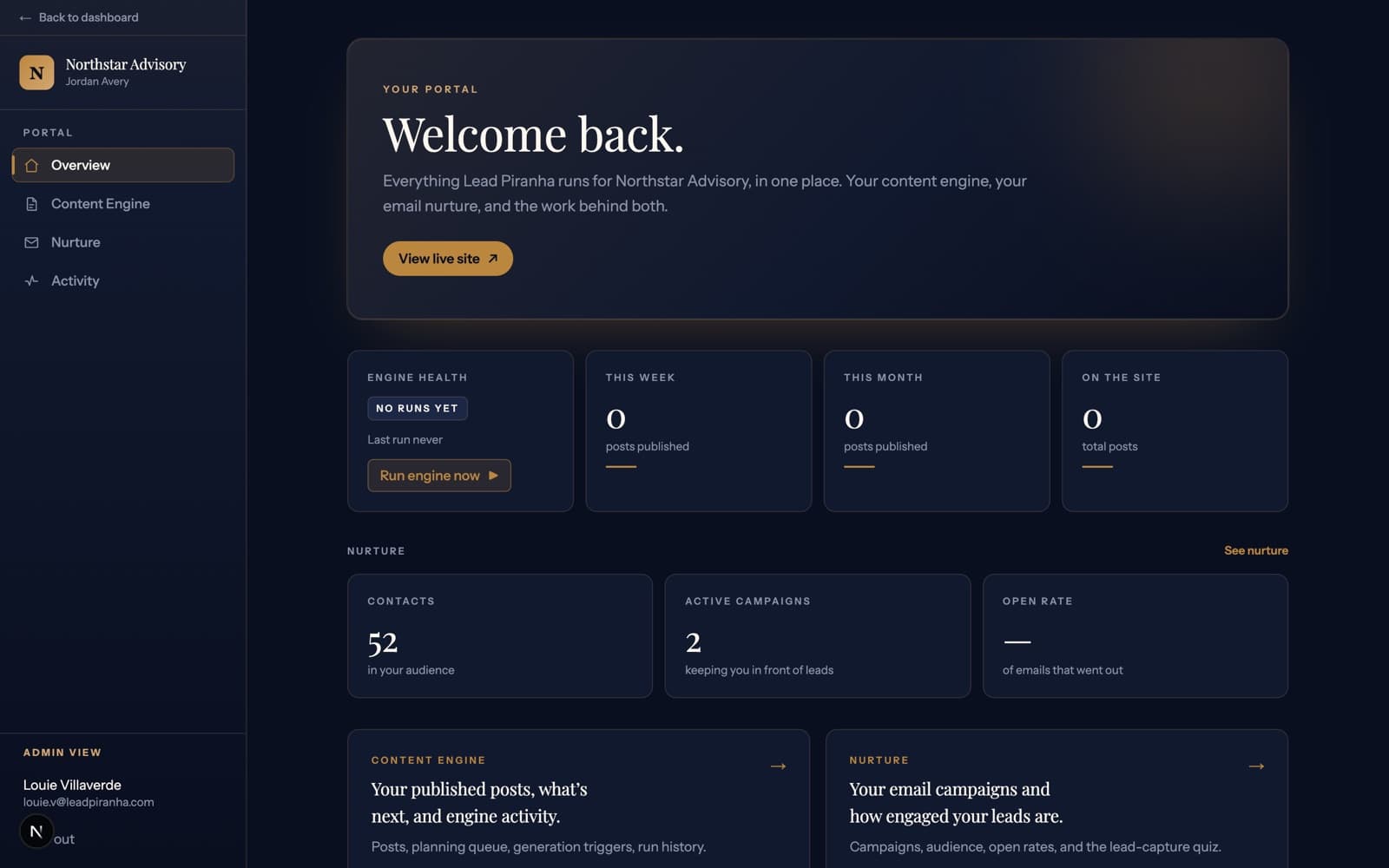
It's built on the same white-label portals and task system our own team lives in every day, with intake, dispatch, and document generation running off your real data.
Built for teams drowning in coordination, data entry, and paperwork that pulls them off billable work.
One place it all lands
Requests from every channel arrive in the same place, so nothing lives in one person’s texts.
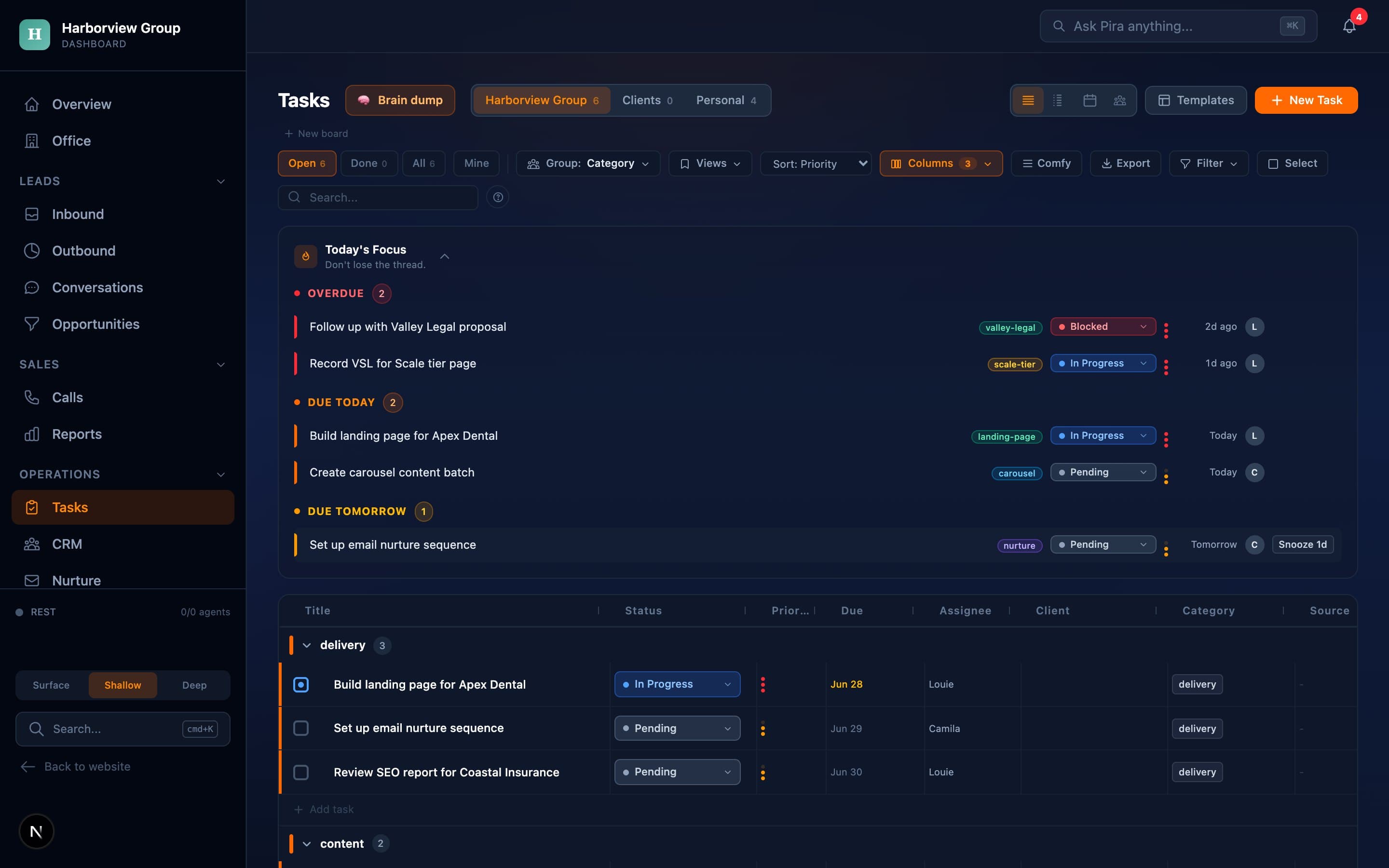
The task board that runs the work, inside a client operating system. Shown with sample data and a placeholder brand.
What your Operations system gets done.
It takes intake, dispatch, paperwork, and client management off your team, so they can get back to the actual work.
Where most builds start
Meridian Partners, house rules
- Minimum order $2,500, we decline below it
- Six-week lead time on custom builds
- Never quote a custom build without drawings
Company knowledge base
Core buildEverything about how your business actually runs, in one memory the AI reads before every task, so nobody has to explain it again.
- How you price, quote, and schedule, written down once
- Your services, territory, and the jobs you turn away
- Read by every part of the system, so answers stop depending on who's asked
- Jordan A. · newAnswered 6 intake questionsQualified
- P. Whitman · newOutside service areaReferred out
- Meridian Corp · newCommercial, 3 sitesTo Sam
Intake and triage
Every new job or request sorted, tagged, and routed the moment it lands.
Queued
In progress
Done
Task and project management
A real task board with calendar, reminders, and saved views, so nothing falls off the radar.
Interfaces shown with sample data.
These three usually come first, since they’re the quickest to pay for themselves.
What else it can take on
Meeting capture
Calls and site visits turned into follow-up tasks and decisions automatically, so what was agreed doesn't live in one person's memory.
Job dispatch and routing
Get the right job to the right person automatically, with nothing sitting in limbo.
Document and SOP generation
Contracts, work orders, and standard operating procedures generated from your data instead of retyped by hand.
Inventory and ordering
Track what you have and reorder before you run out.
Client portals (white-label)
Core buildA branded command center your clients or team log into, with their data, jobs, and documents in one place.
The Diagnostic tells you which of these are worth building for your business, and prices each one before you commit.
What’s inside your Operations system.
Everything above runs on agents in here. This is the live slice of our own system that does this job today.
Departments
What sets it off
Every dot is an agent that runs our own Operations the way yours would run.
That’s the whole Operations system, running for us today. Yours starts with whatever your Diagnostic finds is costing you the most, so you’re not paying for all of it on day one.
Stronger together.
Each system runs on its own, and they share one operating system, so pairing them compounds what either does alone.
What owners ask before they start.
Usually very little. We build on the tools your team already uses, like monday.com or your CRM, and pull things into one place where that saves them logins. Most of the work reaches them the way it always did, as a job with a name and a due date, and we train them on every system before it's handed over.
It's built around how you already work, so the odd steps are the part we map first. We start from proven pieces and adapt them, which is why a system is live in 7 days instead of months.
Yes. You get branded portals on your own domain where a client or a crew sees their jobs, documents, and status, and role-based access means people only see what they should.
Contracts, work orders, and SOPs get generated from the data you already have instead of typed out again. The information only gets entered once, at intake, and everything downstream builds off it.
A system that works most of the time gets quietly abandoned, because your team drifts back to the old way and nobody tells you. So the Build ends with your team trained on every system and using it on real work. From there your team runs it, or we run it for you on a Takeover, watching it closely and tuning it until nothing's being worked around. The Diagnostic tells you which way fits.
Something else on your mind? See how the whole thing works.
Operations system
Starts with a Diagnostic
Get started
See what a Operations system would take off your team.
It starts with a Diagnostic. We talk to you and the people doing the work, rank what's worth building, and show you working demos with a price on each system before you commit.
Step 1 of 3: You