AI Roof Inspections Tucson: The Real Payoff
AI roof inspections Tucson crews run in 20 minutes, not two hours. What drone roof damage assessment changes about estimates, callbacks, and booked jobs.
Most roofing owners around Tucson are not skeptical about drones. They are skeptical about buying one more piece of gear that ends up rattling around in the back of a truck while the estimate backlog still runs four days deep after a monsoon cell tears through Catalina Foothills. That is a fair read, and it is the honest starting point here. AI roof inspections Tucson crews are running right now only pay for themselves when the photos feed something on the back end that actually turns a damage call into a signed job.
Here is what you will get out of this post: a clear picture of what AI roof inspections Tucson crews actually perform on a property, what the technology does and does not do, what it changes about your estimate turnaround, and where it quietly falls apart if the rest of your intake is still manual. We will cover the Tucson-specific roof failures these tools catch, what automated roof estimates do to your close rate, and the callback problem nobody brings up in the sales demo.
Why Tucson Roofs Fail in Ways the National Playbook Misses
Roofing content written for Dallas or Denver is built around hail. Tucson is a different animal. Your damage calls cluster around monsoon microbursts, 60-plus mph outflow winds, blowing dust packing into flashing, and roughly 300 days a year of ultraviolet punishment that cooks coatings and makes tile underlayment brittle long before the tile itself gives up.
Then there is the roof mix. A big share of the residential stock here is low-slope with spray polyurethane foam or an acrylic coating, plus concrete tile across the newer subdivisions in Oro Valley and Vail. Foam roofs do not fail dramatically. They fail as pinholes, blisters, and ponding you cannot see from the ground or from a ladder at the eave.
That matters for pricing, because the ticket spread on these jobs is brutal. A foam patch and recoat section might be $1,100. A full tile tear-off and underlayment replacement on a 3,000 square foot house runs $18,000 to $30,000. Guessing wrong on the walk costs you either the job or the margin.
The National Weather Service office in Tucson tracks the monsoon season from June 15 through September 30, and 2021 still stands as the wettest monsoon on record for the city. We are at the tail of the season right now, which is exactly when your damage call volume spikes and your estimate backlog gets ugly.
What Do AI Roof Inspections Tucson Crews Actually Run?
An AI roof inspection is a drone flight that captures high-resolution and often thermal imagery of a roof, then runs those images through software that measures the roof, flags damage patterns, and produces a report and a takeoff without a person crawling the deck. The flight takes 15 to 25 minutes. The report generates while your tech is still loading the drone case into the truck.
The three pieces doing the work are worth separating:
- Photogrammetry and measurement. The software stitches the flight into a 3D model and pulls pitch, square footage, ridge and valley lengths, and penetration counts. This is where automated roof estimates Tucson contractors quote from actually come from.
- Damage classification. Computer vision models trained on thousands of roof images flag blistering, cracked tile, lifted flashing, ponding, and coating breakdown. This is the roof damage assessment technology piece.
- Thermal imaging. On foam and low-slope roofs, an infrared pass after sundown shows trapped moisture as heat signatures. That is the single highest-value scan in this market and the one most crews skip.
Anyone flying commercially needs a Part 107 remote pilot certificate, and the FAA lays out the requirements for commercial drone operators plainly. Budget a few weeks for one person on your crew to get certified before you build a sales process around this.
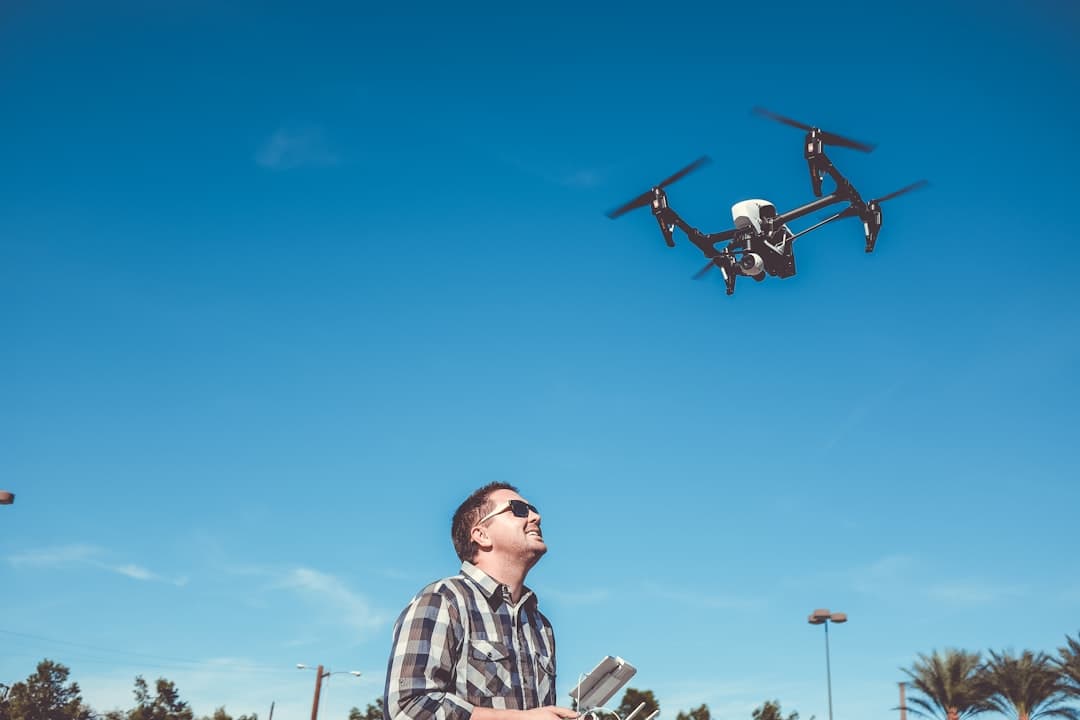
Drone Inspections for Roofing Cut the Site Visit From Two Hours to Twenty Minutes
Run the math on your own week. If a traditional walk-and-measure inspection eats 90 to 120 minutes door to door and your estimator does four a day, drone inspections for roofing push that to eight or nine without adding a person. That is the whole argument for AI roof inspections Tucson owners keep hearing, and it holds up.
Quick win: stop sending your best closer out to measure. Send a $22-an-hour tech with a Part 107 card to fly the property, and have your closer present the finished report by video call the same afternoon. You just split one expensive job into two cheap ones and doubled your daily capacity.
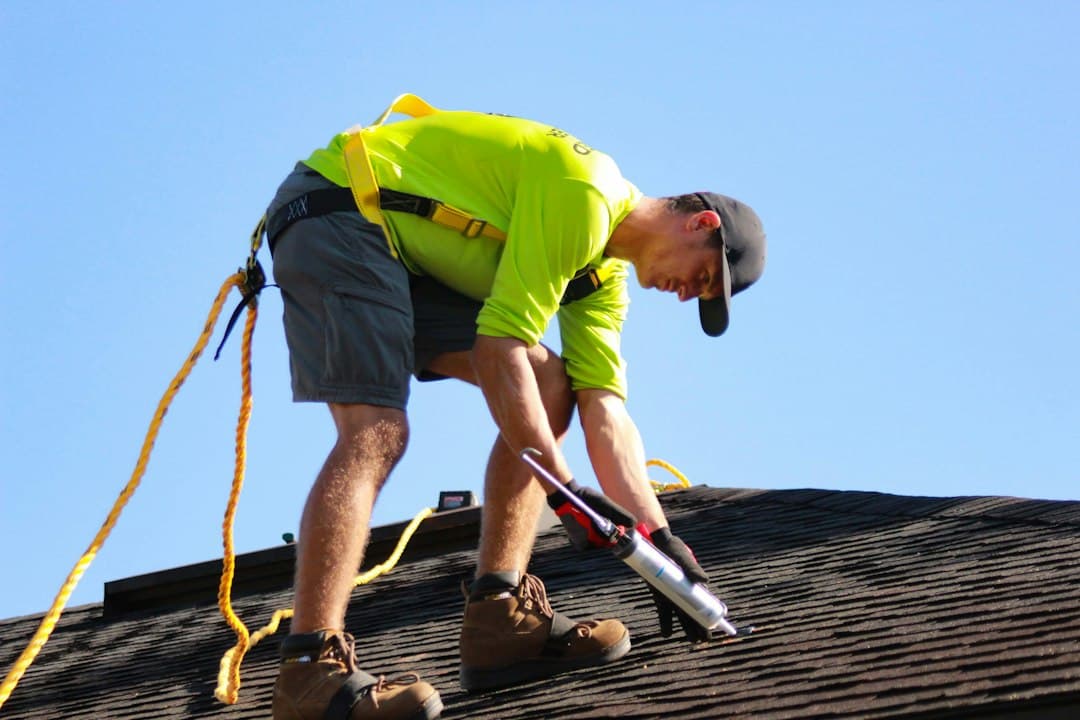
The second benefit is liability. Nobody is walking a 7:12 tile roof at 108 degrees in August. Your workers comp experience modifier notices that over a couple of years, and so does your insurance renewal.
Calculate Your Growth Potential
Adjust the inputs below to see projected results for your business.
Plug your own crew size and ticket average into that and the capacity gain is usually the least interesting line in the output. Doubling inspection throughput only matters if you have enough Tucson roofing leads in the pipeline to fill those extra slots, and most shops here do not have a capacity problem in September. They have a conversion problem. The bigger swing comes from what happens to the bids you already sent, because a faster inspection does nothing for an estimate that sits untouched for three weeks.
Most of the crews running AI roof inspections Tucson homeowners are seeing this fall still track open proposals in a notebook or a spreadsheet tab nobody opens after Wednesday. Two flights a day turns into twelve open bids a week, and twelve open bids with no follow-up cadence is just a longer list of jobs you lost politely. That gap is worth closing before you spend another dollar on hardware, and it costs nothing but a process decision.
The Lead Piranha Playbook
You're doing the work of a team you don't have.
Every Tuesday I show you one job I automated for good. What it does, the tools by name, and the prompt to copy.
No spam, unsubscribe anytime.
Do Automated Roof Estimates Actually Close at a Higher Rate?
Yes, but not for the reason vendors pitch. The lift does not come from accuracy. It comes from timing and from what the homeowner sees.
A Tucson homeowner with a water stain on the ceiling after a monsoon downpour is calling three or four companies the same morning. Whoever puts a real number in front of them first sets the anchor everyone else has to argue against. When AI roof inspections Tucson companies deliver a measured, photo-annotated estimate in four hours instead of four days, they are not winning on price. They are winning because they showed up with proof while the competition was still trying to schedule the walk.
The proof part is underrated. A report with a marked-up overhead image showing exactly where the coating failed and where moisture is sitting under the foam does the objection handling for you. Homeowners stop asking "how do I know I need this" and start asking "how soon can you start."
Across the roofing operations we build intake systems for, the pattern is consistent: the bottleneck is almost never the estimate quality. It is the 19 to 40 hours that pass between the inbound call and the number landing in the customer's inbox. We break down how the capture, qualification, and follow-up pieces fit together in our full process overview, and the inspection tech plugs into the front of it.
The order of operations matters
Buying the drone before you fix your intake is backwards. A 20-minute inspection does nothing for a call that sits in voicemail until 6pm. Fix the response path first, then add the flight time savings on top of it.
Does Roof Damage Assessment Technology Lower Callback Rates?
It lowers a specific kind of callback: the one where you priced a repair, opened the roof, and found 400 more square feet of saturated foam than the estimate accounted for. Those change-order conversations are the ones that generate bad reviews and eat your crew's scheduled day.
Thermal scanning on low-slope Tucson roofs catches most of that before the bid goes out. What it does not catch is anything under tile or inside the deck, so keep a contingency line on tile work regardless of what the model reports.
The other callback category is different and worth separating. Someone requests a quote, you fly the roof, you send the report, and then nothing happens for three weeks until they call a competitor. That failure has nothing to do with AI roof inspections Tucson crews are running and everything to do with what happens after the report goes out. If your follow-up is a salesperson remembering to check a spreadsheet on Friday, you are losing those jobs. We covered the mechanics of that in our breakdown of missed call text back for contractors, and the same principle applies to unanswered estimates.
- Estimator spends two hours per property walk
- Homeowner waits three to five days for a number
- Foam moisture found after tear-off begins
- Follow-up depends on someone remembering
- Tech flies the roof in twenty minutes
- Annotated estimate lands the same afternoon
- Thermal scan prices the wet section upfront
- Automated sequence works every open bid
- Estimator spends two hours per property walk
- Homeowner waits three to five days for a number
- Foam moisture found after tear-off begins
- Follow-up depends on someone remembering
- Estimator spends two hours per property walk
- Homeowner waits three to five days for a number
- Foam moisture found after tear-off begins
- Follow-up depends on someone remembering
Tap “AI-Assisted Process” to compare
What AI Roof Inspections Tucson Will Not Fix in Your Roofing Business
The technology is a measurement and trust tool. The companies adding drone flights to their process this year will not make the phone ring on their own, because nothing about a flight creates demand that was not already there.
Plenty of Tucson roofing companies we talk to are already spending $4,000 to $9,000 a month on Google Ads and Local Services Ads and still cannot explain which half is working. Adding drone inspections to that does not change the answer. You end up with faster estimates going to the same unqualified traffic, which mostly means you are now producing polished reports for people who were never going to sign.
The stack that actually moves revenue in this market has four parts working together:
- 1Traffic that matches intent. Storm-response searches behave nothing like planned-replacement searches. Same keyword, different buyer, different page.
- 2Capture that answers in under a minute. Text-back on missed calls, a form that routes to a phone instead of an inbox, and after-hours coverage through monsoon weeks.
- 3Qualification before dispatch. Roof age, insurance claim status, ownership, and roof type sorted before you spend a flight on it.
- 4Follow-up that runs on its own. Every open estimate gets a sequence for 45 days, because tile reroofs at $20,000-plus rarely close on the first conversation.
The inspection tech makes steps one through three more efficient. It cannot create them. If you want the front half mapped out first, the 7-step system for booking more roofing jobs covers the sequence in order, and our look at how AI roof inspection technology played out in Salt Lake City shows how a different climate changes which scans matter.
Bottom line: AI roof inspections Tucson operators adopt this fall will save real hours and real liability, and they will move your close rate a few points on speed alone. The bigger number is sitting upstream in the calls you never answered and the bids you never followed up on.
Turning Monsoon Damage Calls Into Dispatched Roof Jobs
The season is ending, which means the next 60 days decide how much of that storm demand you actually captured versus handed to the company that answered first. If your inspection process is fast but your intake is not, the flights are just a nicer way to lose the same jobs.
We build the capture, qualification, and follow-up layer that sits in front of the truck, so every damage call gets a response in under a minute and every open bid keeps working until it closes or dies. If you want to see what that looks like mapped to your crew size and your current ad spend, book a 30-minute call and we will walk through it.
Next up in this thread: what changes when the same system runs commercial property managers instead of homeowners, because the qualification questions flip almost entirely.