Missed Call Text Back for Contractors
Missed call text back turns a rung-out phone into a booked job. What the first 90 seconds should say, and what skipping it costs contractors.
You already know the phone rings when your hands are full. That part is not a revelation, and you do not need another article telling you to answer faster. What you probably have not priced out is what happens in the ninety seconds after the ring stops, because that window is where the homeowner decides whether you are still an option or just a name they already tried. A missed call text back fills that window automatically, before the caller taps the next result.
Here is what this post covers: what the text should actually say in the first ninety seconds, why the math changes depending on whether the call was a $180 service call or a $6,200 panel job, and where these systems leak once the text goes out.
What Does a Missed Call Text Back Actually Do in the First 90 Seconds?
A missed call text back is an automatic SMS that fires to the caller's number the instant your line rings out. It confirms you got the call, names your company, and asks one qualifying question. The homeowner can reply with their thumbs while standing over a leaking water heater, and your phone gets a live thread instead of a voicemail nobody plays.
The reason it works has nothing to do with clever copywriting. It works because the caller is still holding the phone. Ten minutes later they are not. Pew Research's mobile technology data puts smartphone ownership at 91% of American adults, and texting is the one channel almost everyone checks inside a minute.
Harvard Business Review's research on lead response found companies that made contact within an hour were nearly seven times more likely to have a real conversation with a decision maker than those that waited even sixty-one minutes. An hour is generous for a burst pipe. The homeowner calling about water on the floor is working a list, top to bottom.
The window is shorter than you think
For emergency home services work, the caller usually stops dialing after the second or third shop picks up. Your text does not need to win the job in ninety seconds. It only needs to keep you on the list long enough to call back.
Why Missed Calls Cost Home Services More Than Most Trades
Your ticket spread is what makes this expensive. A missed call for a dentist is one cleaning. A missed call for an electrician might be a $150 outlet repair or a $4,500 service panel upgrade, and there is no way to tell which one rang out. Roofers live with a worse version of that spread, where a single storm-season call can carry a $25,000 replacement behind it.
Then seasonality stacks on top. HVAC shops in the Southeast take a punishing volume spike through the first real heat of May and again during the December cold snaps. Plumbers get hammered during freeze events. Roofers get a week of hail calls that funds a quarter. During those windows, your call volume can double while your crew size stays exactly the same, which means the percentage of calls that ring out goes up precisely when each one is worth the most.
Here's the problem: most shops measure this backwards. They look at the jobs they booked during the busy stretch, see a record week, and never count the calls that went nowhere. Your carrier's call log has that number sitting in it right now.
Quick win: pull last month's call detail from your phone provider and count inbound calls under fifteen seconds of connect time. That is roughly your rung-out volume. Multiply by your average ticket and by a conservative 20% close rate to get the dollar figure you are currently writing off.
The Lead Piranha Playbook
You're doing the work of a team you don't have.
Every Tuesday I show you one job I automated for good. What it does, the tools by name, and the prompt to copy.
No spam, unsubscribe anytime.
What Should the First Text Actually Say?
Most auto missed call text back setups ship with a default message that reads like it came from a phone company, and that default is why a lot of contractors decide the whole thing does not work. The text has to sound like a person who was on a roof.
The ninety-second text
Keep it to three parts: who you are, why you missed it, and one question that moves the job forward. Something like: "This is Dave at Coastal Electric, I'm on a job site and couldn't grab the phone. What's the address and what's going on?" Naming the trade matters because homeowners in a panic call four numbers and forget which is which.
The one question is the part most shops skip. A text that only says "sorry we missed you, we'll call back" puts the work back on you and gives the caller nothing to do. Asking for the address and the problem gets you a reply, and a reply is a lead you can dispatch against.
The follow-up at ten minutes
If they do not answer the first text, one more goes out around the ten-minute mark with a different angle: a time offer. "Can get someone out there between 2 and 4 today, want me to hold it?" Specific windows outperform "when works for you" because the caller does not have to think.
After that, stop texting and let a human take over. Two automated messages read as helpful. Five read as a robot, and in the trades that costs you the referral more than the job.

Where Contractor Leads Leak After the Text Goes Out
The text is the easy part. We are a Miami-based team and most of what we fix on home services accounts is not the first message, it is everything downstream of the reply. Three leaks show up over and over.
The first is that replies land in a personal cell phone that nobody watches after 6pm. The second is that the texting tool does not talk to the dispatch software, so a booked reply never becomes a scheduled job. The third is that nobody scores the replies, which means a tire-kicker asking about warranty on a five-year-old install gets the same attention as a homeowner with standing water.
That last one is worth sitting with. When a system reads the reply, checks whether it names an address and a problem, and routes the urgent ones straight to whoever is dispatching, the crew stops triaging their own inbox. We break down how the routing and qualification layers fit together in our full process overview, because the text itself is maybe 15% of the actual build.
Quick win: send a test text to your own business line from a number nobody has, at 7:40pm on a Tuesday. Time how long until a human replies. That number is your real answer, not the one on your website.
Before
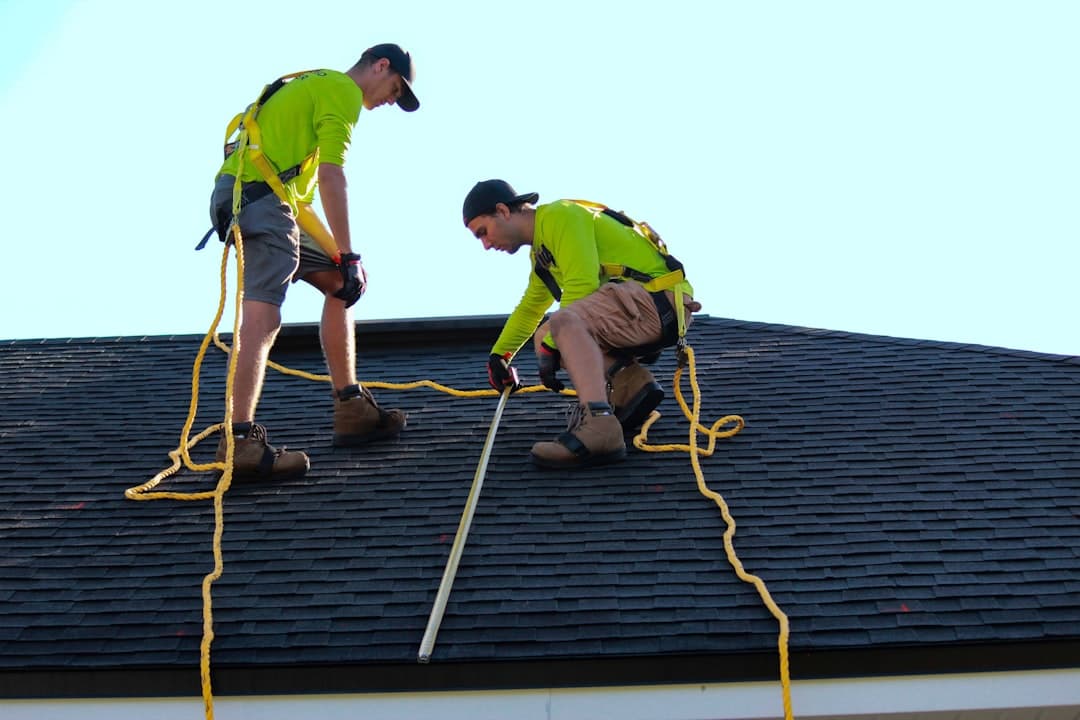
- Phone rings out on a roof
- the voicemail sits unheard until 8pm
- and by then the homeowner has already booked the shop that answered on the second ring.
After Lead Piranha
- Text fires in under 20 seconds
- Caller replies with address and problem
- Urgent jobs route straight to dispatch
- Slow leads drop into a follow-up sequence
Is Missed Call Text Back Worth It for a Two-Truck Shop?
Smaller operations usually assume this is a tool for shops with a call center, and the math says the opposite. A four-person crew misses a higher percentage of calls than a company with a dedicated CSR, so the recovery upside is larger per dollar spent.
Across the home services accounts we run, recovering roughly a fifth to a third of rung-out calls is a realistic expectation once the replies are actually being worked. On a shop taking 200 calls a month with 30 going unanswered, that is six to ten conversations you were not having, against a tool cost that lands well under a single average ticket in most trades.
Bottom line: the question is not whether missed call text back pays for itself. It is whether you have anyone set up to work the replies it generates, because an unanswered text is worse than an unanswered call. We have written before about how plumbing shops handle inbound volume and how HVAC contractors connect this to their dispatch stack, and the pattern is identical in both.
Run your own numbers below before you decide.
Calculate Your Growth Potential
Adjust the inputs below to see projected results for your business.
Turning Rung-Out Calls Into Dispatched Jobs
If your call log has thirty unanswered calls a month sitting in it, you already have the demand. The gap is the ninety seconds after the ring, and a missed call text back only closes that gap when the replies route somewhere with a person and a schedule behind them.
We build the whole path, from the text that fires on the missed call to the qualification that decides who gets dispatched first, wired into the software your crew already uses. If you want to see what that looks like for your shop, tell us about your operation here.
Next up in this thread: what to do with the 60% of texted-back callers who reply and then go quiet for three days, and why most contractors give up on them about four days too early.