Med Spa Patient Reactivation: The Sequence That Works
Med spa patient reactivation, send by send: the lists, the six-touch cadence, and the numbers from a client campaign that ran this exact structure.
Somewhere in your patient list is a woman who came in three times last year, loved her results, and hasn't booked since February. Nothing went wrong, life just got busy, the reminder never came, and her next appointment quietly became no appointment.
Med spa patient reactivation is the work of getting her back, and it's the highest-margin med spa marketing a practice can run, because you already paid to acquire her. This post is the sequence itself: how to cut the three lists that actually matter, what each of the six messages says, what one client's campaign produced when we ran this structure, and the one number that tells you whether it worked.
Why Does Med Spa Patient Reactivation Beat New Acquisition?
Because the expensive part is already done. Harvard Business Review's retention research puts acquiring a new customer at five to twenty-five times the cost of keeping one, and a lapsed patient sits on the cheap end of that range: she knows your name, she liked the result, and she has no objection left to handle except the calendar.
The catch is that most practices treat the lapsed list as a someday project. It has no owner, no clock, and no send date, so it becomes the campaign everyone agrees is a good idea and nobody runs. Meanwhile the ad budget keeps buying strangers at full price.
Here's what the same mechanism produced for one client. Different industry, so read it as evidence about the method rather than a promise about your practice:
That client sells skincare, not treatments, and the list was smaller than most med spa databases. The reason it worked isn't the industry, it's that the message went to people who had already bought once and the ask was specific. Both of those are things you can copy this week.
Who Counts as a Lapsed Patient?
Start with the treatment cycle, not a calendar quarter. A tox patient is lapsed at four months, a facial patient at eight weeks, and a package patient the moment the package ends without a rebook. Pull three lists on those clocks and you have your audience already sorted by how warm it is.
The mistake that kills most attempts happens right here: exporting one giant past-patients list and blasting it with the same "we miss you" email. The tox patient needs a nudge, the package finisher needs a next step, and one message lands wrong for both. Cutting the list three ways takes an afternoon and roughly doubles what the sequence returns, because each person hears something that matches where she actually stopped.
Pulling them is less work than it sounds. Export every appointment from the last eighteen months, sort by treatment type, then by last visit date, and draw the line at each cycle length. Anyone past their line goes on the list. Anyone who has already rebooked comes off it, which is the step practices forget and the reason somebody occasionally gets a "we miss you" text two days after their appointment.
The Lead Piranha Playbook
Weekly strategies we use to close more deals.
AI-powered lead gen, paid ads breakdowns, and booking flow teardowns. Zero fluff.
No spam. Unsubscribe anytime.
Which list should you run first?
Hundreds of names, no clock on any of them
Start with the tox list. It has the clearest cycle, so the timing argument writes itself and you learn the sequence on the easiest audience.
A big list but patchy contact details
Start with whoever has a mobile number. SMS carries this sequence, and a clean list of 200 beats a messy list of 2,000.
Small list, mostly package clients
Start with package finishers. They ended on a high and nobody asked for the next step, which is the shortest distance to a booking.
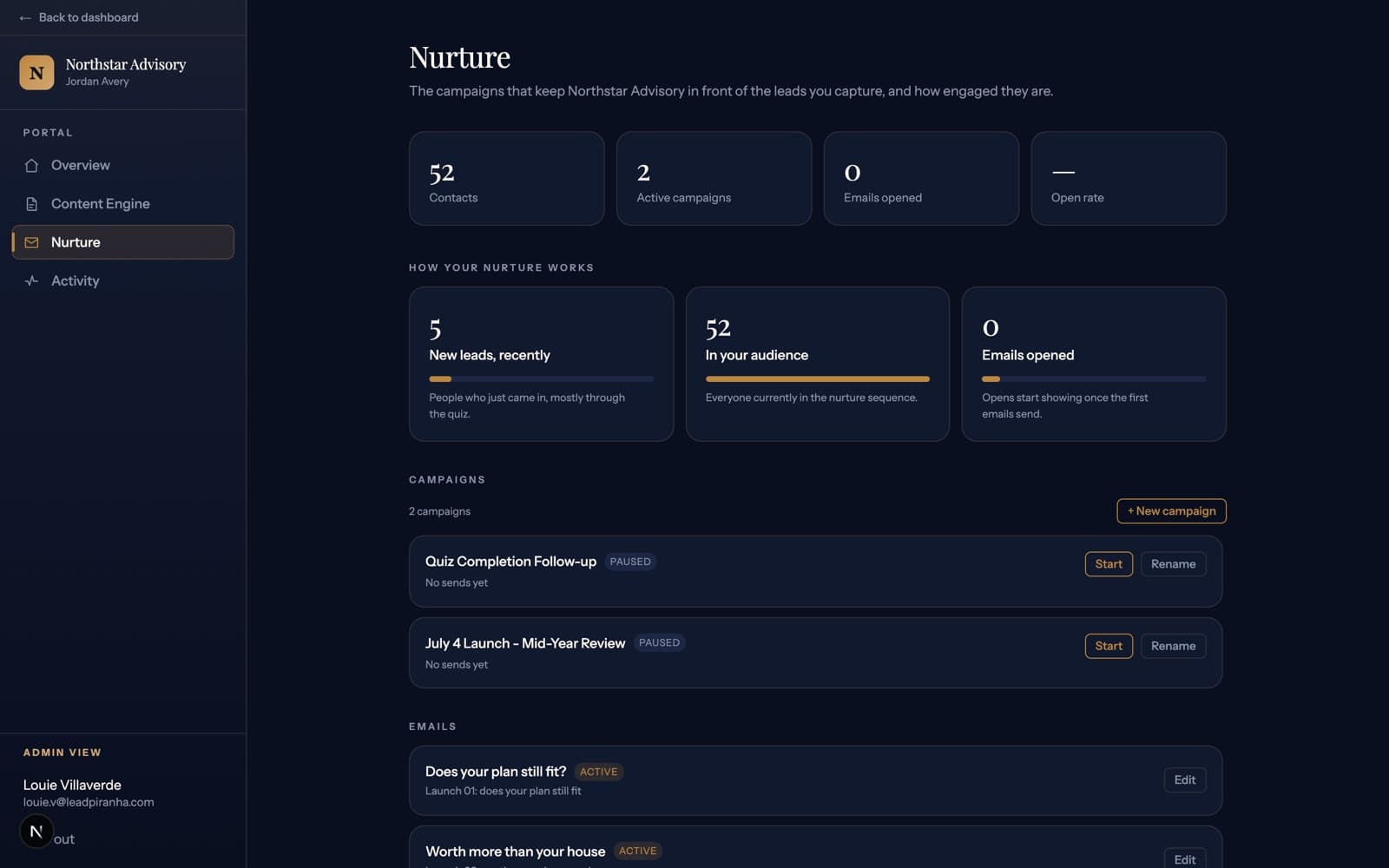
That's the view we build for clients so the lists rebuild themselves nightly and nobody has to remember to pull them. You can absolutely do this by hand from your booking system's export. The lists just have to exist and stay current, because a reactivation list that's six months stale is a list of people who already found somebody else.
What Does the Sequence Actually Look Like?
Six touches over five weeks, alternating email with SMS, each one written like a person and not a promotion. The order matters more than the wording:
| Day | Channel | The message | What usually happens |
|---|---|---|---|
| 1 | SMS | Personal check-in tied to her last treatment, no offer at all | Replies from the warmest part of the list |
| 4 | Results timeline: what fades at this point in her cycle | Opens, and a few quiet rebooks | |
| 10 | SMS | One-tap rebook link with two specific open slots named | The biggest booking day of the sequence |
| 17 | A short before-and-after from a patient like her | Warms the ones still deciding | |
| 24 | SMS | Time-bound courtesy hold on her usual slot | Second booking spike |
| 35 | Graceful close with the door left open | Cleans the list honestly |
What those messages actually say matters less than you'd think, as long as they sound like a person. Day one reads close to this: "Hi Dana, it's Marisa at the studio. You were due around now for your usual, and I wanted to check in before the fall rush. How have things been?" No offer, no link, no urgency. Day 10 is the one with the ask, and it stays just as short: "Two openings this week, Thursday 2pm or Friday 10am. Want me to hold one?"
Notice what neither message does. There's no discount, no "we miss you," and no guilt about the gap. A patient who lapsed because life got busy doesn't need a reason to feel bad, she needs somebody to make rebooking take ten seconds.
Day 10 does the heavy lifting, and it only works because of the two messages before it. By the time the rebook link arrives, she has remembered why she came in and seen where her results sit in the cycle, so the ask reads as a convenience instead of a pitch. Practices that skip straight to day 10 get a fraction of the bookings and a pile of unsubscribes, which is the whole argument for the sequence over the blast.
The reply is the win
Half the value of message one is the replies it pulls. A patient who answers a text is no longer lapsed, she's in a conversation, and conversations book. Route every reply to a human the same day, because an automated response to a real answer undoes the goodwill the first message just bought.
What Happened When a Client Ran This Structure?
The campaign behind those numbers was one send to a list of buyers who had gone quiet, tied to a holiday with a real reason to reach out. Nine orders came back on a list where the channel benchmark predicted two or three, and revenue per contact landed at roughly three times the high end of typical.
Two things carried it, and neither was clever copy. First, the list was cut by behavior rather than by date, so the message matched what the person had actually bought. Second, the send had an owner and a date on the calendar, which sounds trivial until you count how many reactivation campaigns die as a good intention. That's the thread running through everything we've written this month about where the work waits: the work itself is rarely the hard part, and the handoff is.
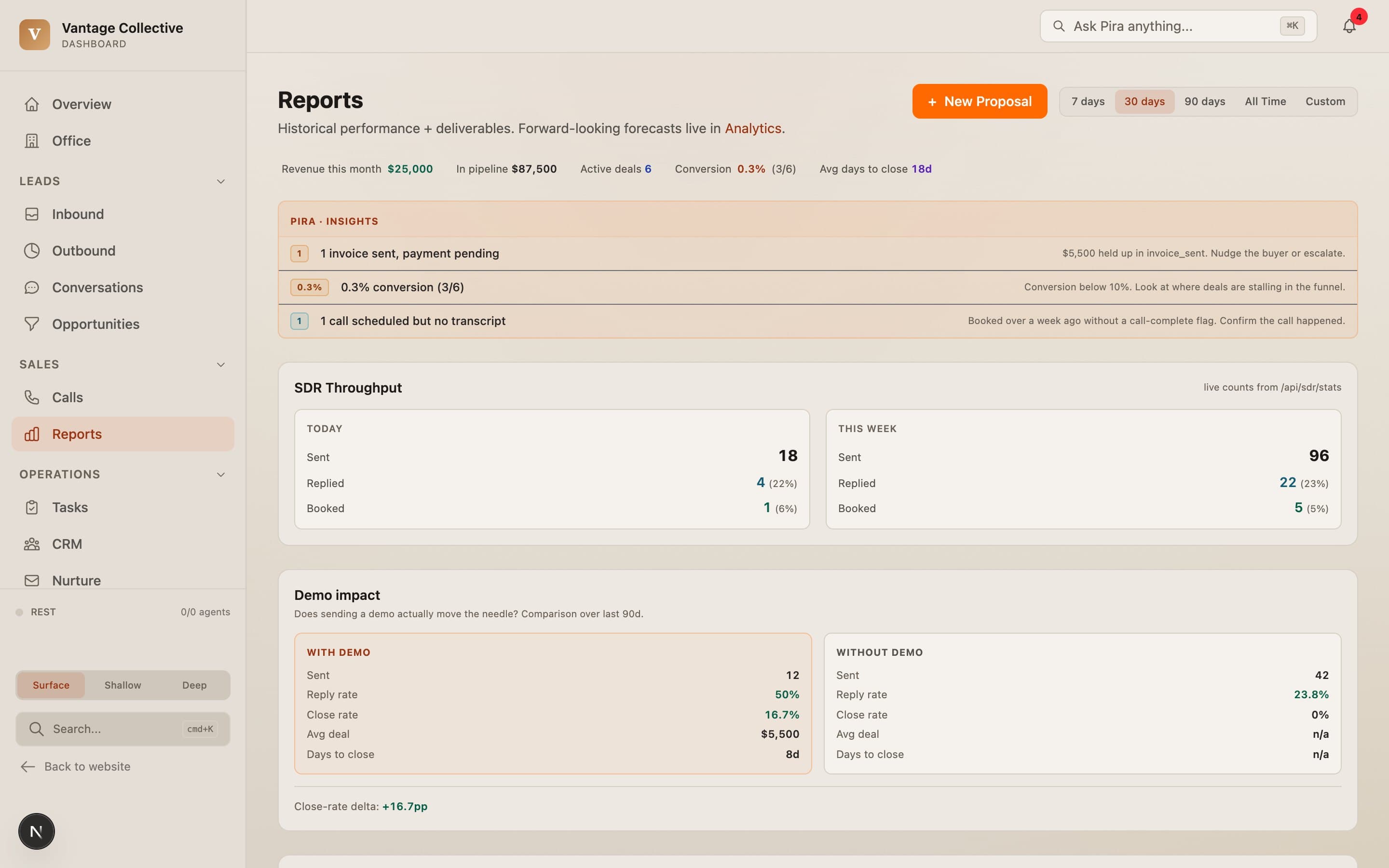
For a med spa, the equivalent send is a treatment-cycle check-in rather than a holiday, and the rest transfers directly. Your list is warmer than a skincare buyer list, because a patient who sat in your chair has a relationship with a person and not a product.
How Do You Know It Actually Worked?
One number: rebooks from the lapsed list inside 45 days, measured against a holdout group you deliberately did not message. Opens flatter you and clicks lie, but a patient on the calendar who was not going to book is revenue you can point at, and the holdout is what separates the sequence's effect from patients who would have drifted back anyway.
Set it up before the first send, not after, because a holdout picked afterward is just the people who didn't respond. Take every fifth name off the list at random and set them aside untouched.
Keep the holdout small, maybe fifty names, and leave it alone for the full 45 days. It costs you a few bookings and buys you certainty about whether to run this every quarter. We wrote up the acquisition side of the same math in the med spa patient acquisition system, and reactivation should beat it on cost every single month. If it doesn't, the problem is the list and not the sequence.
The version we build and run keeps the lists current, fires the sends on the cycle clock, and routes replies to a human, which is the part that breaks first when a practice runs it manually through a busy season. Our process page walks through how that gets stood up.
A Tuesday Where February's Patients Are Back on the Book
That's what this sequence buys: the quiet middle of your week filled by people who already trust you, at a fraction of what the same appointment costs through ads. Next week we'll take the same idea upstream and look at what happens before a patient ever lapses, in the booking and confirmation flow. If you'd rather have the lists, the sends, and the replies handled for you, book a call and we'll map your lapsed list together.