How We Got 148 ADU Construction Leads Under $50
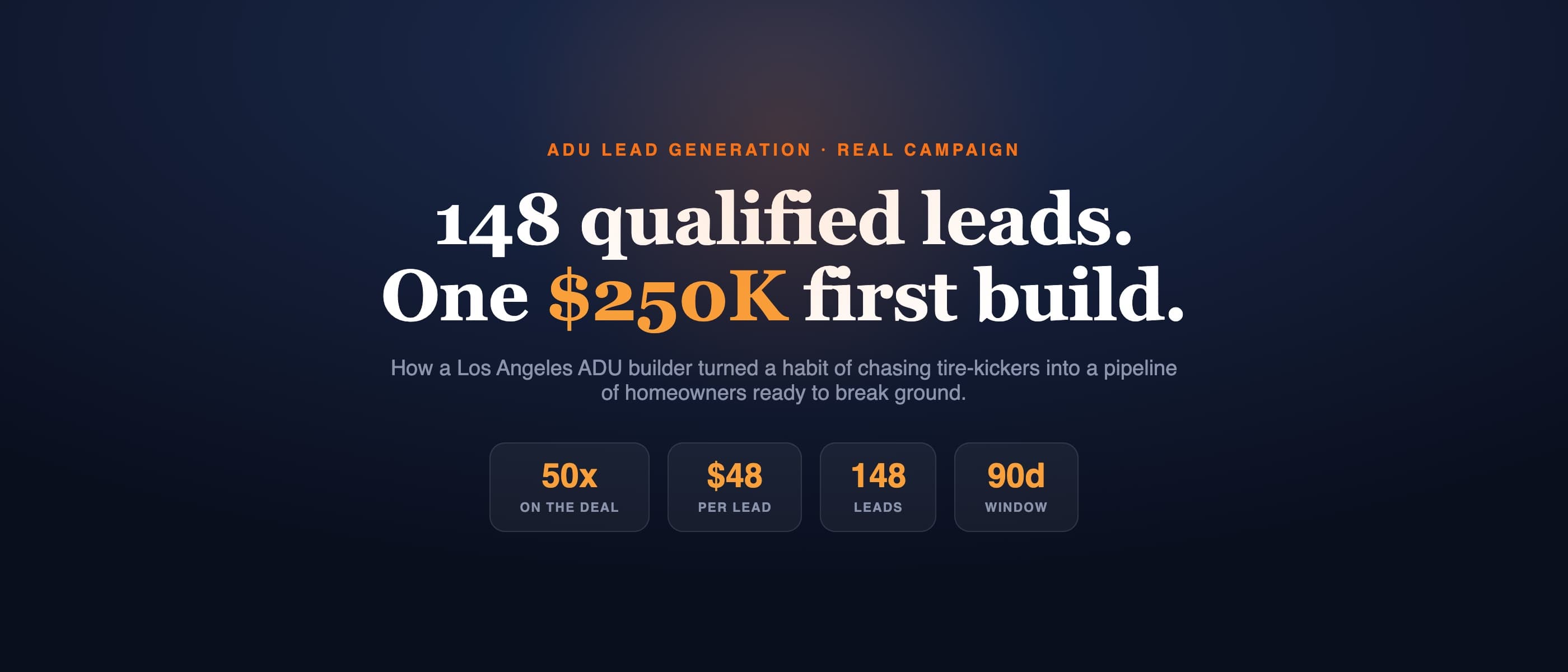
ADU construction lead generation that filled a Los Angeles builder's pipeline with 148 qualified leads under $50 each, and closed a $250,000 first build.
A residential ADU builder in Los Angeles came to us with the problem every high-ticket contractor eventually hits: plenty of interest, almost none of it real. Homeowners filled out forms, went quiet, and the crew burned its week chasing people who were never going to break ground. In just 90 days, we rebuilt how the leads came in and how fast they got worked, and ADU construction lead generation stopped being a coin flip. The pipeline produced 148 qualified leads at under $50 each, and the first project that closed was a $250,000 build, more than 50 times the ad spend behind it.
I want to walk through what actually moved that number, which was a system: the right offer in front of the right Los Angeles homeowners, an intake that filtered for people who could actually build, and a follow-up that fired in seconds instead of days. Here's what the campaign really returned, why the cheap leads were also the good ones, and where most builders quietly leak the pipeline they already paid for.
Why Most ADU Booking Automation Buys Tire-Kickers
The default way ADU builders buy accessory dwelling unit leads is to boost a pretty before-and-after photo, send everyone to a generic form, and hope. It fills the top of the pipeline with curious browsers. You get renters who can't legally build, homeowners a year from financing, and a handful of people comparison-shopping ten contractors at once. The cost per lead looks fine on the dashboard and the close rate quietly tells the truth.
The fix turned out to be a stricter front door, and the budget never moved. Good ADU builder marketing comes down to who it lets through that door. We built the ADU lead generation around an offer that only appeals to someone actually weighing a build, then used the form itself to qualify: lot situation, timeline, and what they wanted the unit for. A slightly higher-friction intake scares off the browsers and keeps the builders, which is exactly the trade a high-ticket contractor wants. You get fewer raw leads, and far more of them are real.
The Lead Piranha Playbook
You're doing the work of a team you don't have.
Every Tuesday I show you one job I automated for good. What it does, the tools by name, and the prompt to copy.
No spam, unsubscribe anytime.
What Does a $50 ADU Lead Actually Look Like?
A good ADU lead is a Los Angeles homeowner who owns the lot, has a reason to build (a rental unit, aging parents, a home office), and answered enough up front that your estimator has somewhere to start, which is a much higher bar than a name and an email. At under $50 each, 148 of those is a genuine year of pipeline for a builder whose average project runs six figures.
The math is what makes ADU construction lead generation different from chasing $15 home services leads. When one closed build is worth a quarter of a million dollars, a $50 lead doesn't need a great close rate to pay for itself many times over. It needs to be real, and it needs to be worked before it cools. Run your own numbers and the logic gets obvious fast.
Calculate Your Growth Potential
Adjust the inputs below to see projected results for your business.
The point the calculator makes better than I can: in a high-ticket trade, lead cost is almost a rounding error against deal value. What decides whether the campaign wins is how many of the good leads you actually reach in time, and the price per lead barely figures into it.
The Follow-Up Is Where ADU Leads Live or Die
Here's the part almost nobody gets right. A homeowner researching an ADU is filling out three or four builder forms in one sitting. Whoever answers first frames the entire project and sets the terms everyone else gets compared against. Answer an hour later and you're the third callback on a decision that already has a frontrunner. Harvard Business Review's research on online sales leads put hard numbers on this years ago, and nothing about it has softened.
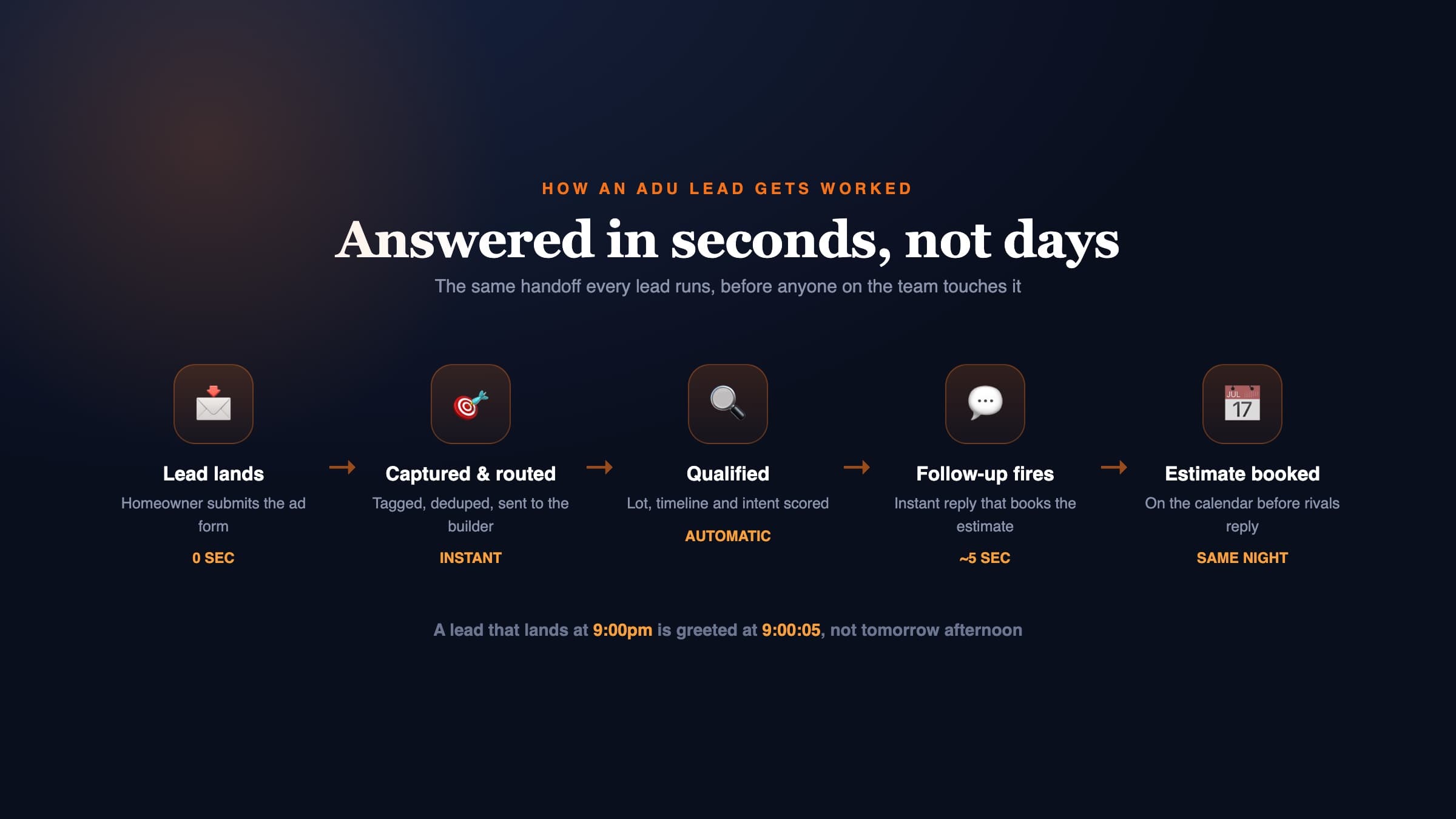
So we wired the intake to move on its own. The moment a lead form submits, it tags the contact, alerts the builder, creates the opportunity, and drops the homeowner into an automated sequence that answers instantly and books the estimate, all before a human touches it. We break down exactly how that capture-and-respond loop gets built in our full process overview, so a lead that lands at 9pm is greeted at 9:00:05 instead of tomorrow afternoon, when two competitors have already visited the lot.
Speed beats polish on the first touch
So How Did One Campaign Return 50x on the First Deal?
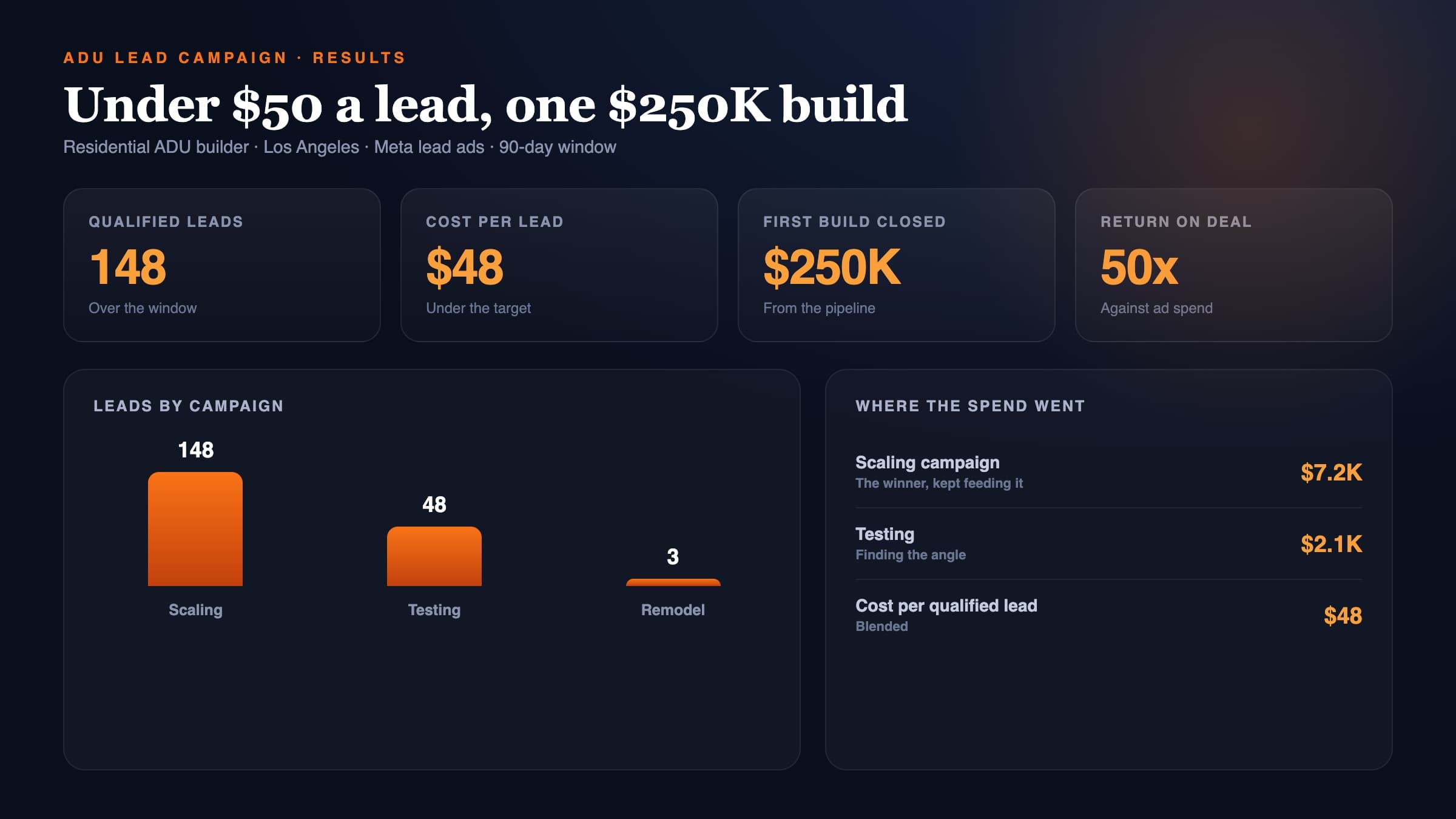
Because cheap, qualified, and fast compounded. The scaling campaign alone pulled 148 leads at roughly $48 apiece, the intake filtered them to homeowners who could actually build, and the instant follow-up got the best ones onto the calendar before they cooled. Out of that pipeline, the first project to close was a $250,000 build. Set that against the ad spend that produced it and the return stops being a marketing metric and becomes a business result.
None of the individual pieces are exotic. Targeted lead ads, a qualifying form, and automated follow-up are the same bones behind every lead system we build. ADU is just an unusually forgiving place to run them, because the ticket size means one good month can carry a quarter of a year.
Is Your ADU Pipeline Leaking the Same Way?
Most builders assume a disappointing campaign means the ads are bad. Nine times out of ten it's the front door and the follow-up. Run through the quick check below and you'll usually find the leak in about a minute.
Quick Growth Check
5 questions. 30 seconds. Find out where your growth system stands.
If a few of those answers stung, that's the gap between paying for leads and actually converting them, and it's a fixable one. The builders winning ADU work are just filtering harder and answering faster than the shop across town.
Fill Your ADU Pipeline With Real Builds
If you're a builder running ads that produce a lot of forms and not many walkthroughs, the leak is usually a front door that lets everyone in and a follow-up that answers too late to matter. If any of this sounds like your pipeline, book a 30-minute working session and we'll map where your ADU leads are actually going cold, and what it takes to answer the good ones before your competitor does.
The trades change but the lesson holds: in ADU construction, the builder who filters hardest and answers fastest wins the build long before the bid.