Solar Sales Follow-Up That Wins the Miami Quote
Solar sales follow-up is where Miami installers win or lose the deal. Here is how automated nurture keeps a quoted system from going cold before it signs.
You size the array, model the savings, and send a clean proposal to a homeowner in Homestead. They tell you the numbers look great, and then nothing. No reply to the follow-up email, no answer to the call, just weeks of quiet while a five-figure decision sits somewhere you cannot see. Solar sales follow-up is where a Miami installer wins or loses that deal, because a solar purchase almost never closes on the first conversation. It closes over the weeks a homeowner spends weighing financing, permitting, and two competing bids, and it goes to whoever stayed in the conversation the longest. There is a steadier way to run that stretch, one that keeps every quoted system warm without you chasing it after dark. This post covers why the silence after the proposal is where the deal actually dies, what real follow-up owes you across a long solar decision, and the automated system that carries a quote all the way from proposal to signed.
Why the Deal Goes Cold in the Weeks After Your Solar Proposal
Solar is not an impulse buy. A homeowner in Kendall is comparing installers, waiting on a financing decision, reading up on net metering, and pricing a twenty-year commitment against every other thing they could do with the money. That process takes weeks, sometimes a couple of months, and almost none of it happens while you are standing on their driveway.
So the proposal goes out, and most installers treat that as the finish line when it is really the starting gun. One check-in call two days later, maybe a voicemail, and then the file quietly goes cold. The homeowner was never a no. They were a maybe who needed six touches through a long decision and got one.
The installer who stays present through that window reads as the one company that answered the financing question on day nine and the permitting question on day seventeen, while two competitors sent a PDF and vanished. Nobody experiences that as pushy.
It helps to picture the real timeline. A homeowner in Coral Gables requests a quote in March because they want the panels producing before the summer bills hit. You survey the roof, pull their usage, and send a thorough proposal within a day. Then the permitting reality of building in Miami-Dade sets in, the spouse wants a second opinion, and the deposit conversation stalls for a month while everyone thinks it over. Nothing about that delay means the deal is dead. It means the deal is exactly where every long solar decision sits for a while, and the only question is whose solar sales follow-up is still in the homeowner's inbox when the thinking is done.
The second proposal is where the system is chosen
What Does Solar Sales Follow-Up Owe You Between the Proposal and the Signature?
Getting the lead is the easy half. Any installer in Miami-Dade can run ads for rooftop solar and fill a form with names. The part that separates a booked install calendar from a folder of dead proposals is what happens in the three or four weeks after you hit send.
Good solar sales follow-up owes you presence, not just a fast first reply. The first touch still matters, and Harvard Business Review's research on how quickly a fresh online inquiry goes cold is blunt about how fast a lead stops answering. But for a system this expensive, the first answer only earns you a seat in the comparison. What wins the contract is showing up, on schedule, through the whole decision, without the homeowner ever feeling chased.
| Across the decision | Following up by hand | Through the pipeline |
|---|---|---|
| Day two check-in | Sent if someone remembers | Auto-sent, every proposal, no exceptions |
| Financing question | Answered whenever you circle back | Addressed on schedule while it still matters |
| The three-week quiet | The file goes cold in the inbox | A touch still lands on week two and week four |
| A competing bid arrives | You never hear about it | You are already in the conversation framing it |
That kind of consistency is a discipline no busy installer keeps by hand. You are on a roof in Homestead, your closer is at a site survey, and the nine open proposals from last week are aging in an inbox nobody is watching. The solar lead follow-up that closes deals is the follow-up that runs whether or not anyone remembers to do it.
The Lead Piranha Playbook
Weekly strategies we use to close more deals.
AI-powered lead gen, paid ads breakdowns, and booking flow teardowns. Zero fluff.
No spam. Unsubscribe anytime.
The Follow-Up System That Carries a Miami Solar Deal From Proposal to Signed
The fix is a system that treats every proposal as a contact with a scheduled sequence attached, so a quote sent on Tuesday triggers its own follow-up on the days that matter, for as long as the decision takes. A bigger sales team would just generate more unfollowed proposals.
The moment you mark a proposal as sent, the homeowner drops into an automated sequence: a same-day recap, a check-in a few days later with a financing option, a permitting and timeline note the following week, a production-and-savings touch after that, each one spaced to match how a real solar decision unfolds in Miami-Dade. You approve the tone once. After that it runs on its own.
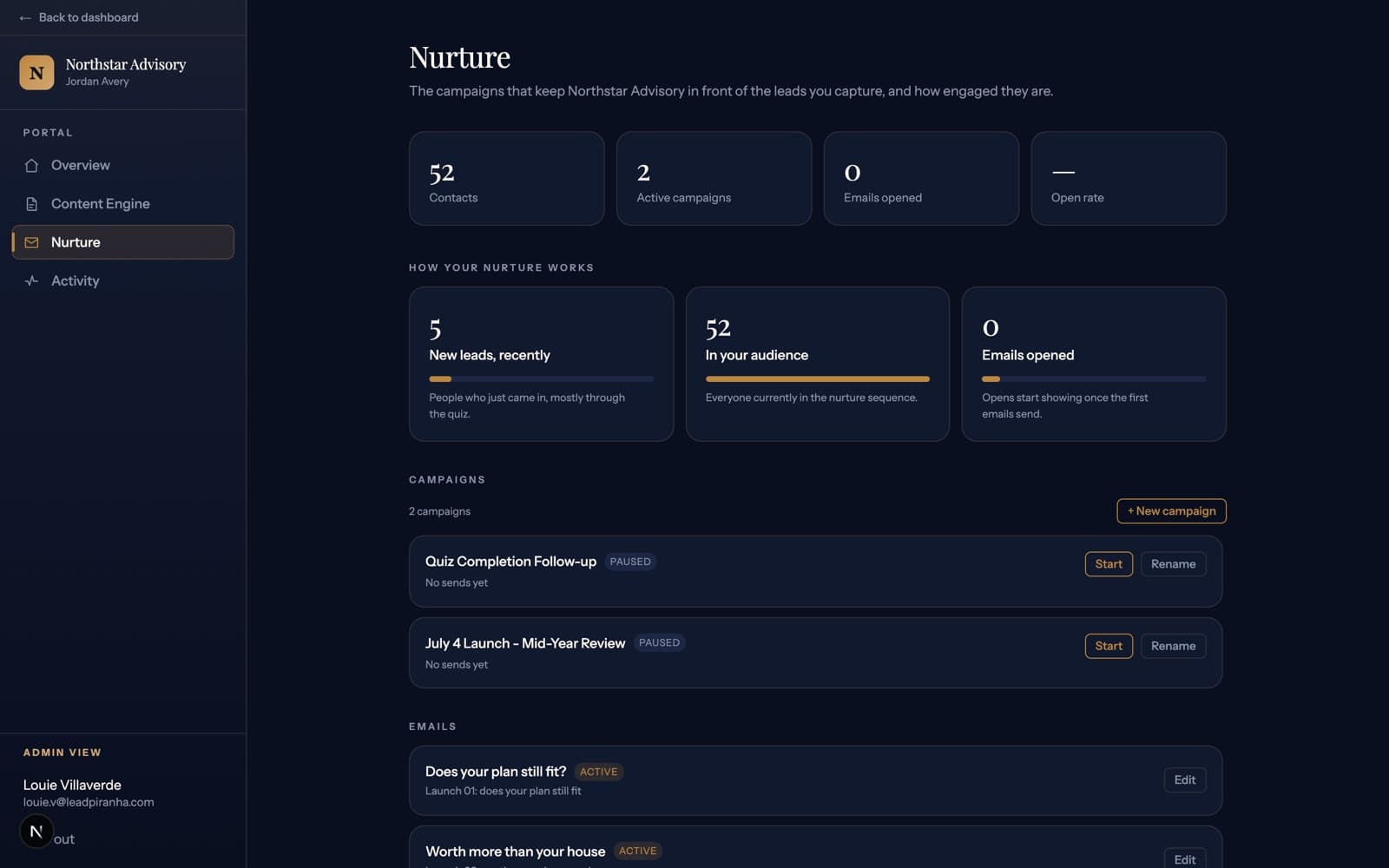
None of these messages are hard sells. They are the questions a homeowner in Cutler Bay is already asking their spouse, answered before they have to ask you. And because the sequence is automated, the homeowner who goes quiet for three weeks still hears from you on week two and week four, exactly when a competitor has gone silent.
The other quiet benefit is that every touch is logged against the contact, so when the homeowner finally does reply, you are not scrambling to remember which roof, which utility bill, which financing plan. The proposal, the messages already sent, and their earlier questions are all attached to the record. We walk through exactly how that capture-and-nurture loop gets wired in our full process overview, so a proposal you send at 4pm is still working for you at 9am three weeks later. It is the same infrastructure our home services lead generation is built on, tuned for a sale with a long, quiet middle.
Is Automated Follow-Up Really Different From Just Calling Them Back?
It is, and the difference is the whole point. A callback depends on someone remembering, on a Tuesday during install season, to work back through a list of nine aging proposals. Automated solar quote nurture depends on nothing. The sequence fires on the calendar, in your voice, whether the week was calm or chaos.
Before
- A proposal goes out and the follow-up depends on a busy closer remembering it
- One check-in call lands on day two and then the file goes silent
- A homeowner in Pinecrest weighs a competing bid with nobody from your side in the conversation
- The deal is lost weeks later and you never learn why
After Lead Piranha
- Every sent proposal drops into a scheduled sequence that runs on its own
- Touches land on the days a real solar decision actually turns
- The financing and permitting questions get answered before a competitor calls back
- A quiet homeowner is handed back to you warm and ready to sign
This is also how a small solar crew competes with a larger outfit that has a full office staff. You do not need a person assigned to babysit the pipeline. You need the pipeline to run the routine follow-up on its own, and to hand a live, ready-to-close homeowner back to you only when there is something worth your time. That is a reach no two-person Miami operation can turn on this week without hiring anyone.
The math on all this is simple, and it is why installers stop treating solar sales follow-up as a nice-to-have. One signed install can carry a slow month, so recovering even two or three proposals a season that would otherwise have gone silent pays for the whole system many times over. Unlike more ad spend, that recovery costs you nothing per lead, because these are homeowners you already paid to reach and already sat down with.
Worth being clear on the distinction: this is not about getting more leads. Filling the top of the pipeline is a separate job, and we cover that in how to generate solar leads in Homestead. This post is about the stretch after those leads have already asked for a quote, where good prospects cool off because nobody stayed in the conversation. Answering first at the inquiry and nurturing through the decision are two halves of the same machine.
Turning Quoted Systems Into Signed Solar Contracts
If your ads are producing plenty of proposals and not enough signed contracts, the leak is almost never the lead. Look at the quiet weeks after the quote, where a motivated Miami-Dade homeowner slowly cools off because nobody stayed present. If that sounds like the tax you are quietly paying on every bid, book a working session and we will map a proposal-to-signed pipeline that keeps every quoted system warm, so the good solar jobs stop slipping away in the silence.