Facebook Ads for Skincare Brands: 3x ROAS on $20 a Day
Facebook ads for skincare brands hit 3x ROAS on $20 a day, and 80% of the revenue came from the email follow-up after a three-question quiz.
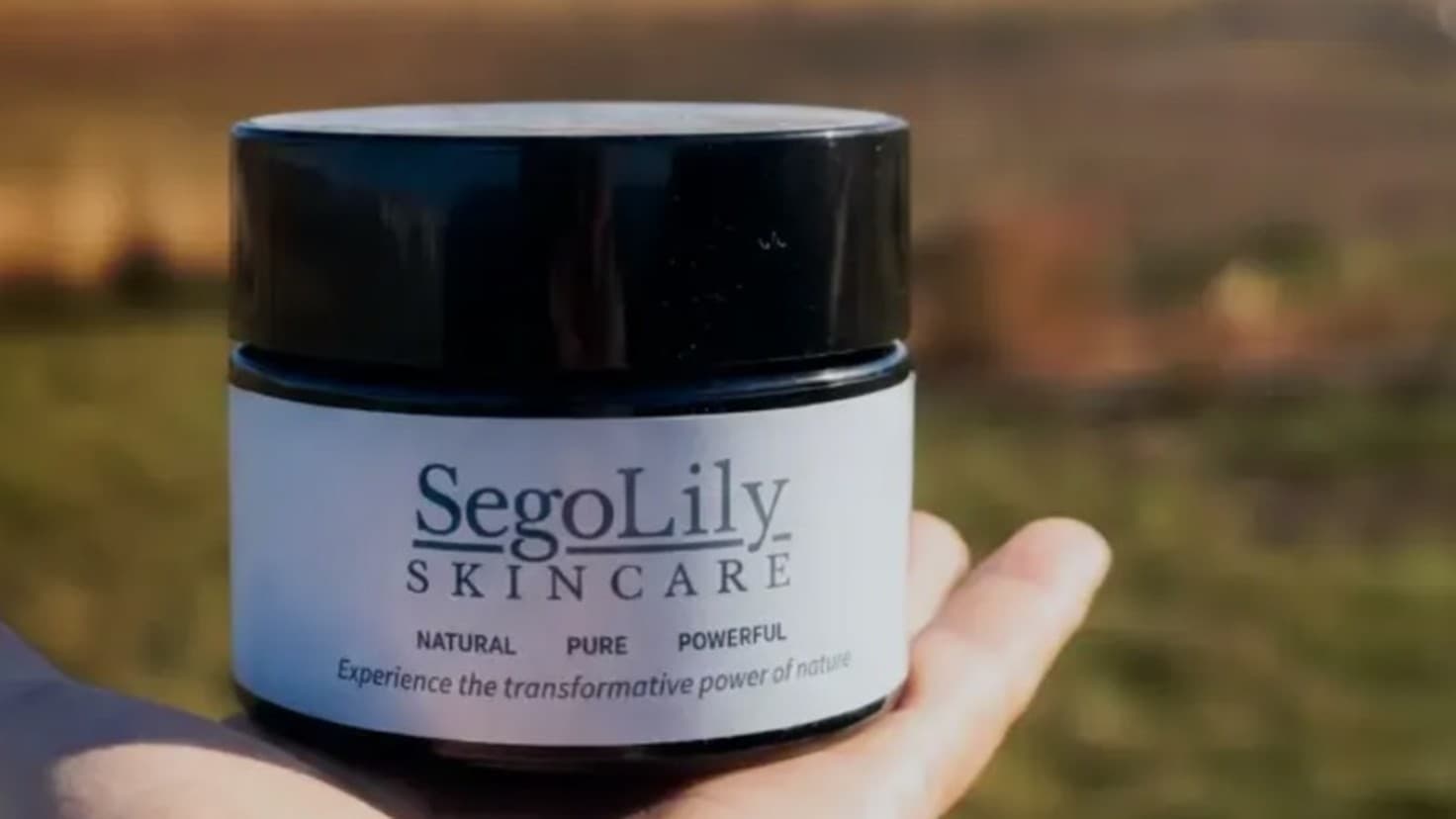
Sego Lily Skincare is a handmade, tallow-based brand built far from the usual beauty-industry noise, and during Cyber Week 2025 it ran one of the tidiest campaigns we've shipped. On a $20 a day test budget, in just 9 days, our Facebook ads for skincare brands returned 3x, five sales off about $132 in spend. The number I actually care about is buried in the split, though: only one of those sales came straight from the ad. The other four, and roughly 80% of the revenue, came from the email follow-up that ran after the quiz.
This was one of several campaigns we've run for Sego Lily, and a different one returned 7.8x, which is the number on our work page. I'm writing up this small one because it shows most clearly where the return actually comes from.
That's the whole lesson of the campaign, so I want to unpack it honestly. It was a small cold-traffic test where a skincare quiz did the qualifying and a short email sequence did most of the closing. Here's why $20 a day beat far bigger spends we've seen, how a three-question quiz turned strangers into buyers, and why the return on ad spend was really a return on the follow-up.
Why $20 a Day of Facebook Ads for Skincare Brands Beat Bigger Spends
Most skincare brands equate a good return on ad spend with a bigger budget and a slicker ad. This campaign is the counterexample. The spend was almost nothing, the creative was honest rather than glossy, and it still returned three times over because the money was pointed at the right job: getting a cold shopper to raise their hand.
Cold skincare traffic almost never converts on the first click, and pouring more budget into a one-visit purchase just buys more one-visit misses. The brands that win on a small budget spend to start a relationship, then let a cheap channel finish it. That's exactly the shape here, and it's the same principle behind every lead system we build: capture cheaply, close patiently, and stop asking a single ad to do the entire sale.
The Lead Piranha Playbook
You're doing the work of a team you don't have.
Every Tuesday I show you one job I automated for good. What it does, the tools by name, and the prompt to copy.
No spam, unsubscribe anytime.
How Does a Quiz Turn a Cold Skincare Ad Into a Sale?
The quiz is the hinge. Instead of sending an ad click to a product page and praying, the ad sent people into a three-question skin quiz. Answering feels like getting help, so a stranger who would never buy blind will happily tell you their skin concern, their routine, and what they're frustrated with. By the time they reach a result, they're qualified, segmented, and on the email list. That's what skincare quiz marketing is really for: capturing the hand-raise.
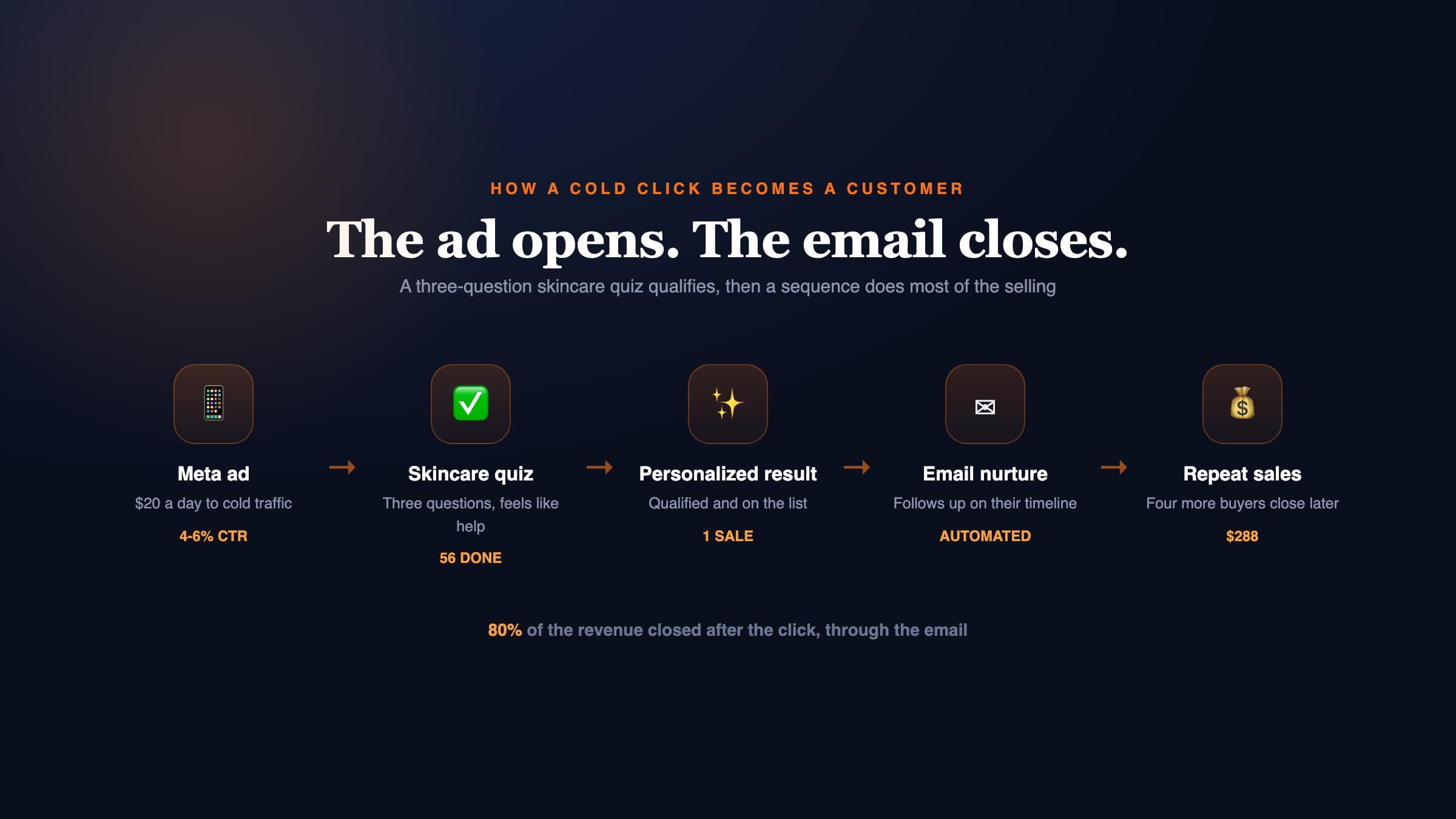
That quiz did double duty: it converted a few buyers on the spot and also captured the interest of everyone who wasn't ready yet, along with the exact skin concern to speak to later. We walk through how that capture-and-nurture loop gets built in our full process overview, because the quiz is worthless if the follow-up doesn't actually run. Cold traffic will tell you what it wants; the system has to remember and reply.
The Email Follow-Up Did 80% of the Selling
Look at where the revenue actually came from. One sale, about $102, closed directly from the ad during the quiz session. Four sales, about $288, closed later through the automated email sequence keyed to each person's quiz answers. Without that follow-up the campaign returns a mediocre result. With it, revenue nearly quadrupled and the return on ad spend cleared 3x. That lift is DTC skincare email nurture doing the quiet work, closing four buyers the ad by itself would have lost.
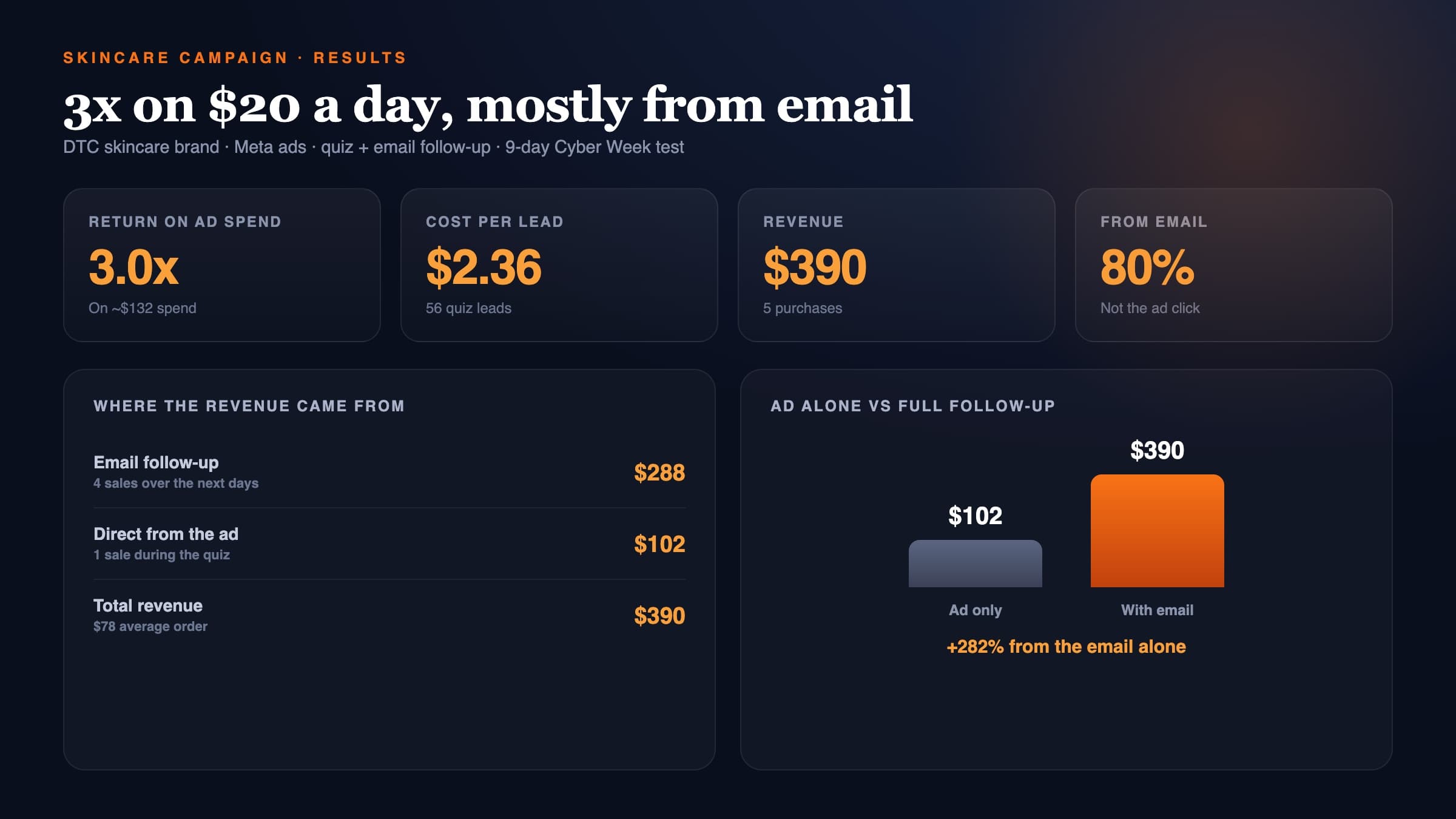
The gap between judging this campaign on the ad alone and judging it on the whole system is the entire story. Slide between the two and you can see exactly how much revenue a same-session-only scorecard throws away.
- The campaign closes a single sale during the quiz session. Revenue stalls near $102 on about $132 of spend. You call the test a break-even dud and shut it off. Four buyers who needed a few more days never hear from you again.
- The quiz captures every interested shopper and their skin concern. An automated sequence follows up on each person's own timeline. Four more sales close over the next several days. Revenue reaches $390 and the return on ad spend clears 3x.
- The campaign closes a single sale during the quiz session. Revenue stalls near $102 on about $132 of spend. You call the test a break-even dud and shut it off. Four buyers who needed a few more days never hear from you again.
- The campaign closes a single sale during the quiz session. Revenue stalls near $102 on about $132 of spend. You call the test a break-even dud and shut it off. Four buyers who needed a few more days never hear from you again.
Tap “The full follow-up counted” to compare
This is the part most skincare brands skip and then wonder why their ad spend underperforms. They judge a campaign on same-session sales and quietly leave the majority of the revenue on the table. The ad is a handshake. The email is the conversation that actually sells, especially in skincare, where people research, compare, and buy on their own timeline rather than yours. Harvard Business Review has long made the case that the patient, repeat side of a customer relationship is where the real money lives, and email is how you actually hold it.
One sale from the ad, four from the email
Is a Quiz and Follow-Up Right for Your Skincare Brand?
If you're running Facebook ads for skincare brands and judging them purely on the sale that happens during the visit, you're almost certainly underrating your own return on ad spend and starving the channel that does most of the closing. The quiz-and-email approach isn't exotic, but it has to be built as one connected system. The quick check below is a fast way to see whether your ad spend has this same leak.
Quick Growth Check
5 questions. 30 seconds. Find out where your growth system stands.
The reason this repeats is that the structure is portable. A quiz that qualifies, a segment that remembers what each person said, and a sequence that follows up on their timeline is the same skeleton we build for any brand, whether it sells tallow balm or runs a med spa acquisition system. The point is that the same handful of moving parts reliably lifts the return on a small budget when the follow-up is actually wired in.
Turn Your Skincare Ad Spend Into Repeat Buyers
If your skincare ads look like they're barely breaking even, the odds are the campaign is fine and the follow-up is missing, so all the revenue that closes a few days later never gets counted or captured. If that sounds familiar, book a 30-minute working session and we'll map where your ad spend is quietly leaking and how to let the email do the selling it should already be doing.
The budgets change and the brands change, but the pattern holds: in skincare, the return on ad spend is really a return on how well you follow up.