
AI Adoption Stalls at One Person: Get the Whole Team On
AI adoption usually stops at one power user. Why teams ignore the tools they pay for, and the three fixes that stick: a champion, a policy, real training.
You bought the licenses, Copilot, ChatGPT Team, maybe both. And if your company looks like most, exactly one person actually uses them, and it might be you.
That pattern has a name now. AI adoption in most small companies stalls at a single power user while everyone else works the way they always have, and the subscription renews anyway. Meanwhile every AI-shaped task quietly routes to the same person until they become the bottleneck. This post covers why that happens, what it quietly costs, and the three fixes that hold up after the first week: a named champion, a written policy, and training that runs on your team's real work.
Why Does AI Adoption Stall After One Person?
Gallup's workplace research found that about four in ten U.S. employees never use AI at work, and their conclusion matches what we see inside client businesses every week: adoption needs shared ownership and people who feel prepared. Tools spread through a team the way any skill does, from one person to the next.
The stall usually has nothing to do with the software, which is why buying a different tool never fixes it. Three things freeze a team:
- Nobody knows what's allowed. Someone asked whether client numbers can go into ChatGPT, nobody answered, and the safe move became not touching it. That question gets asked once, and the silence after it sets the policy by default.
- The examples were generic. The demo showed poems and travel plans, and your dispatcher writes work orders.
- Nobody owns it. Using the tool is optional, learning it is homework, and homework loses to a busy week every time.
The gap in numbers
The SBE Council's 2026 survey found 82% of small business employers use at least one AI tool, and only 22% report revenue gains above 10%. Owning a tool and getting paid by it are different milestones.
What Does the Stall Actually Cost?
Past the subscription line, the real cost is the work your one power user quietly absorbs, since every AI-shaped task drifts to them. Quotes wait on their inbox, the newsletter waits on their week, and you built a bottleneck with better tools. The person who adopted fastest ends up with the least time, which is a strange way to reward the behavior you wanted.
Read those three together and the gap is obvious. Nearly everyone has the tools, most people don't touch them, and only a fifth see money from any of it. The distance between the first number and the last one is made entirely of adoption.
The Lead Piranha Playbook
You're doing the work of a team you don't have.
Every Tuesday I show you one job I automated for good. What it does, the tools by name, and the prompt to copy.
No spam, unsubscribe anytime.
What Does Adoption Actually Look Like When It Works?
It looks boring, which is the part nobody sells you. One person on the team opens a shared prompt list on Monday, uses two of them without thinking about it, and adds a third that worked. To the team, it's just how the quote goes out now.
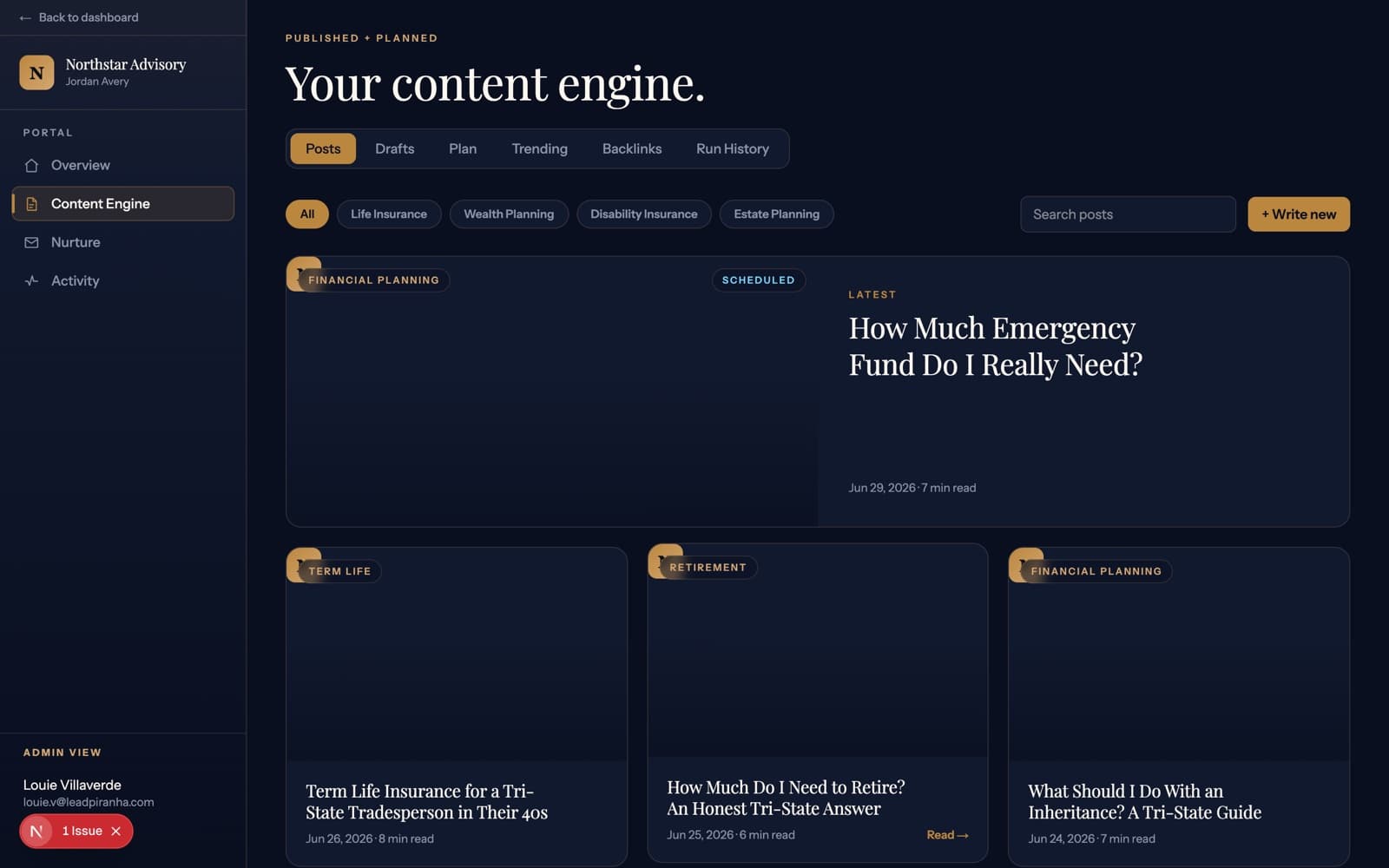
That's our own version of the same idea, running the publishing side of this business. The mechanism is unremarkable on purpose: the work has a place to live, so the tools get used on real jobs instead of demos. Adoption fails when AI stays a separate activity you have to remember to go do.
The Three Fixes That Stick
We took these from what actually survived in businesses we run systems for, and none of them is buying another tool.
Name an AI champion, out loud. One person on the team owns adoption: they field the "can it do this" questions, keep the prompt list, and demo one win at the Monday meeting. Without a name attached, people just stop, and nobody reports it.
It doesn't have to be your most technical person, and often shouldn't be. The best champions are the ones with the most repetitive job, because they feel the payoff first and can explain it to the rest of the team in the language of the actual work rather than the tool. Give them an hour a week that's genuinely protected, and say out loud that the hour is part of the job.
Write the AI policy down, even three lines. What's allowed, what data never goes in, and who reviews anything customer-facing. The teams that skip this stay frozen at the permission question, and the answer costs one page.
Three lines really is enough to start. A policy nobody reads because it runs to nine pages protects you less than three sentences everybody can recite, and you can always tighten it once you know what people are actually doing with the tools.
Train on your own work. AI training for employees only changes behavior when the session uses your real pricing sheet, your real intake form, your last ten quotes. That's the whole design behind our two-hour workshop: everyone leaves with a playbook for their own role, because the practice happened on their own job.
The generic version fails for a reason worth naming. A demo built on somebody else's work asks each person to do the translation themselves, at the exact moment they're least confident, and most people quietly decide the tool isn't for their job. Doing the translation for them, once, in a room, is the entire difference between a team that adopts and a team that watched a webinar.
Whoever runs it matters less than what it runs on. If you have somebody internal who can sit with each role for twenty minutes and build the prompt list with them, that works, and it beats an outside session on generic examples every time.
Which fix does your team need first?
One strong user, everyone else guessing
Name the champion first. Distribution is the real gap.
Everyone curious, nobody starting
Write the policy. Your team is waiting on permission.
Tried it, quietly went back to the old way
Train on real work. Generic examples never survived contact with a real Tuesday.
How Do You Measure Adoption Without Nagging?
Pick one workflow per role and watch whether it moved. Keep it to one per role, because you're testing whether the work changed rather than whether individuals are complying. Did quote follow-ups go out without being written by hand? Did the intake summary come from the recording? Usage dashboards flatter, and finished work doesn't. A seat that logged in twice this week tells you nothing about whether a single quote went out faster, which is the only question that pays for the licenses. We wrote about the same trap at the company level in our look at why 82% of small businesses use AI and most get nothing back, and the answer there is the answer here: connect the tools to the job, or watch them decorate the browser tab.
Give it thirty days, and pick the date before you start. If the champion has wins to demo and the policy question stopped coming up, adoption is compounding. If not, the missing piece is usually the training nobody ran.
Thirty days is also short enough to be honest about. Most of the value of a deadline here is that it forces a real answer instead of a vague sense that people are probably using it, which is the state most companies sit in for a year while the licenses renew.
A Monday Where the Whole Team Uses What You Pay For
That's the actual finish line: quotes drafted before coffee, follow-ups sent without a reminder, and your power user doing their own job again. If you'd rather get there with help, book a call and we'll map it against your team.